Tuesday, July 31, 2012

Pillow Talk

I love old movies. On the one hand old movies unselfconsciously mirror their world. Stuff gets on film without the directors intent. We can watch an old movie and be astonished by how heavily every character smokes for example. From the here and now we can spot such curiosities as how a young female smoker never carries her own lighter. An old movie may be full of such entirely accidental comments on the smoking culture of it’s time. The director probably didn’t set out to make a film about smoking but then has in a way.

On the other hand there’s deliberation behind everything that ends up on screen. This is especially true of old movies when even outside scenes are shot in controlled indoor sets. Whatever is on set and in shot and survives editing has been carefully decided upon. If two characters in a scene do smoke they will have smoked the same four puffs in each take of the shoot. A new cigarette will replace the old one and be re-lit if necessary. Nobody is accidentally, or even incidentally, smoking in a well directed film. These are deliberate accidents.

This makes old movies a great way to view cultural attitudes about gender, race and class as well. The woman with no lighter is not only a smoking reference but a gender one. In my favourite example, Humphrey Bogart was considered too short to play alongside Lauren Bacal so they filmed him standing on a box. That wasn’t the point of Casablanca however it certainly wasn’t an accident either. The boxes height was carefully considered. This tells us something quite specific about the ideal male-female couple in this time.

Unfortunately audiences in Humphrey Bogart’s time didn’t know about the box. That’s the trouble with the movies of any time – the tricks are hidden in order to fulfill the fantasies of the paying audience. Usually it’s the casting couch rather than a box that ensures the stars look “right.” However old movies make strangely outdated choices about what looks normal so we notice them more readily. That’s why they can be much more fun to watch. The deliberate accidents of previous era’s films are far more visible to us than those of our own time.

I just re-watched Pillow Talk with my partner. This 1959 comedy features Doris Day and Rock Hudson (love the stage names) alongside Tony Randall and Thelma Ritter. It’s theme is the battle of the sexes which is itself a cultural phenomenon with a lot less conceptual currency today. In the classic battle of the sexes a woman must snare a man as a husband while he must avoid marriage and snare the woman in turn, in bed. In Pillow Talk appropriately there is no genuine friendship between man and woman. Although Tony Randall and Doris Day’s characters come close he still wants to “get” her (albeit differently to Hudson).

The man loses the battle but wins the war when he realizes that he wants to be gotten as a husband– he falls in love and wants sexual exclusivity with one woman as his wife. The woman also wins when she realizes that she wants to be bedded but that is less openly admitted in Pillow Talk. That’s the happy ending, pending matrimony between the main characters Jan Marrow (Doris Day) and Brad Allen (Rock Hudson) and it sounds quite sweet. In fact it may have been received in that way at the time.

What’s fascinating and disturbing is how open allusions to rape feature in this supposedly sweet film. This is the film the director perhaps didn’t intend and the audience in it’s time may not have noticed. For one thing Jan Marrow is physically assaulted by a character who the film portrays as just a foolish boy. She fights him off in his car but she is only able to stop him by threatening to tell his mother. Afterwards his continual refusal to take her home until he can get her drunk enough to molest her is never something she can bring a close to. She just has to wait until he passes out. Then she is “rescued” by Brad Allen whose intent is exactly the same but whose cleverness is far greater. His trick is to pretend to be a gentleman. 

Any doubt that Brad is just another rapist is dispelled when Jan flips a switch in his love nest. We already know that this simultaneously puts on a seductive record, dims the lights and locks the door. Yes that’s right, it locks the door so that it can’t even be opened from the inside (this is even tested in the film). Any woman trying to leave is forcibly prevented at the flick of a switch. What exactly is Brad up to that she might want to escape? Perhaps the record is to cover the screams for help?

The reality is that those screams probably wouldn’t be answered anyway. The reason why Jan never calls the police on the boy trying to rape her is revealed when Brad carries Jan against her will in her pyjamas past a police man. Jan asks the officer to arrest Brad but the officer merely acknowledges Brad by name and makes a joke.

So just to reiterate this. The film climaxes when our heroine ignores our hero’s rapist past, kissing his big rapist lips in his rapist arms. Because all that raping is to the director and the audience and thus to the hero and heroine just what? Dating? Normal masculinity? Something to put up with? As an accidental film about rape in the fifties and sixties, Pillow Talk is quite exceptional.

There are many other observations about gender that could be made out of this film. One female alcoholic (Jan’s maid) is told “that she needs to find a man to look after” so she doesn’t have time to get so drunk. Helped to her feet by her advisor she replies “How strong you are!” hinting at another rescuing relationship.

The maid, Alva, played by Thelma Ritter is the one who defines Jan Marrows situation as a live-alone career woman as broken. (“If there's anything worse than a woman living alone, it's a woman saying she likes it.”) Alva establishes that Jan Marrow is essentially being rescued from what she doesn’t even know she’s missing. Cheekily I don’t think the film means feminity and homemaking here at all. I think it means sex. Jan needs to be rescued from her “bedroom problems” as Brad puts it. Brad replies faux sympathetically with “too bad” when Jan defends herself with “Nothing is bothering me in my bedroom.”

There is a critical moment when Jan scoffs at the idea that a woman could properly inspect Brad for sexual deviancy.  She refers to the idea as “like sending a marshmallow to put out a bonfire.” In this way Jan actually distinguishes herself from the category woman. She’s not a woman because she can resist Brad’s charms. She’s not wanting to be raped by an attractive and sophisticated man so she must be something else.

Brad however is feminised by his character shift to the extent that at the end of the film he is comically dragged off after being mistaken as a pregnant man. This is touted as an advancement of modern science. It’s a fitting conclusion to a film that might have seemed edgy in its time but now reads as deeply stereotypical and traditional.

There are other comments about race, class and sexuality in the film. I’ll leave them to your own discovery though. I think it adds to the film that we know now that Rock Hudson was gay. I urge you to look out for the scene with Perri Lee Blackwell on piano singing “You Lied.”

Honestly although it’s a massive treatise in favour of rape I want to encourage people to watch Pillow Talk. It shows us something about relatively recent assumptions about women’s right to safety and women’s desire. It certainly helps to de-romanticise the 1950’s ideal and produces in me a gratitude for the changes since. All that and it is tightly written, well paced and expertly acted throughout with the gorgeous colour of the era. Hopefully it doesn’t trivialize the gender politics to say so but the costuming alone is enough to commend this film. Amazing work.

Lastly let’s not fool ourselves that we live in the culmination of history. Today’s films will be old films one day too. The more we can try and see the deliberate accidents of our own times’ films the more we can notice our own immediate cultures as they are produced. The hope after all is to get ahead of the game a bit – maybe even to make culture rather than be made by it.


Wednesday, July 25, 2012

Complementa-whatsit-ism. Just patriarchy or not?


A recent brouhaha lit up a conservative yet still mainstream American Christian web site, The Gospel Coalition. A post titled “The Polluted Waters of 50 shades of Grey” made a connection between the increasing popularity of bondage games in the bedroom and the sublimation of a hardwired inequality between men and women. Basically the post by Jared Wilson claimed that if we deny the natural hierarchy of man over woman in sexual relationships and fail to contain that in an appropriate biblical way (often called complementarianism) then we will turn to other ways of meeting our real needs – i.e. role playing a master and slave dynamic. Before you all rush into your Princess Leah on Tattooine costumes, this is supposed to be a bad thing too.

I can’t link you to the original article because although “The Polluted Waters of 50 shades of Grey” is at the top of their recently popular list (at time of writing) a click on the link says “Not Found”. This post gives some explanation from the author.

It’s a shame the original article was taken down because I would love to refer to some of the one hundred and twenty five comments which can no longer be read. Fortunately the internet has many faces. This site has a pretty good general critique of the original article and its author’s attempt to defend it. This site I think really nails what the original post didn’t say and which the author still hasn’t addressed. What exactly is complementarian sex anyway? 

Firstly complementarianism is a bit of buzz word in conservative Christian circles. Essentially it means the value of different roles in relationships. Sounds nice right? One person complements the other - what could be better?

Except complementarianism is not just one person complementing the other. It’s in fact a word for something less palatable. It’s a bit like when someone looks at a room of white male faces and says “We could do with some diversity in here.”

No, actually its not diversity you want in a room full of white men. Diversity could mean anything. It could mean another white male with a moustache. It’s actually non-white and female representation that’s lacking. When a black women enters the room she doesn’t think to herself “I’m diversity”, she thinks “Wow, I’m the only non-white woman.” (She doesn’t expect to meet up with moustache man later at the diversity table.)

So why, when the organizing committee reviews the event do they talk in terms of “diversity” of attendants? Because it’s softer, it obscures the real gender and race issues and it actually slows down any change by preventing targeted action. It certainly is less offensive to all the white men on the organizing committee too.

Complementarianism as a word achieves a similar thing. It blunts any critique of what is being discussed, it softens it, and it does this by hiding crucial details about what is and isn’t complementarianism. I can’t think of any relationship where there aren’t different roles actually. A lot of relationships have one person who’s a bit more the social ambassador than the other for example. However these situations are not what is meant by complementarianism. The real definition in conservative Christian circles is more specific.

What complimentarianism really means is a prescribed role for men (shared by all men) and a prescribed role for women (shared by all women) and that these roles complement each other. The primary way in which these roles compliment each other is hierarchically. To be absolutely specific men lead and women submit. Remember those old fashioned marriage vows where he loves and cherishes and she honours and obeys? That’s complimentarianism.

Secondly complimentarianists believe that theirs is the right way to have relationships for everyone. Sons in complimentarian families are deliberately raised to lead their future wives, daughters are deliberately raised to submit to their husbands. Complementarian parents are not just parents where Dad is more assertive than Mum but who don’t value that difference particularly and raise kids who may have acceptably different styles of relationships. This is crucial – complimentarianism is not a statement of personal preference but a prescriptive opinion for all sexuality.

Remember it is not merely that people are raised to develop complementary roles with their future partners i.e. In complementarianism, daughters who are inclined to lead shouldn’t look forward to a partner who is inclined to support their leadership but should curb their inclinations and learn to submit. Likewise “submissive” is not a quality that can be as positive in boys as it is in girls in complimentarianism. Yes, at this point complementarianism is really looking just like another word might say it better – Holy Patriarchy Batman, the women are obliged to submit to the men.

There are however two distinctions between complementarianism and patriarchy.  The first is in what relationships women are required to submit to men. I’ve never read or heard a self-identifying complimentarian suggest that sisters should submit to their brothers or that a female boss in the workplace shouldn’t be respected by male employees or that a woman shouldn’t be prime minister. Supporters of what gets called Biblical Patriarchy (as can be seen here) have no such definite limits. It’s impossible to make absolute statements about changing social movements but as far as I can tell complimentarianism consistently only applies patriarchy to sexual relationships (which are only allowed in heterosexual marriages) and church matters (i.e. ministers and celebrants).

Secondly and very importantly complimentarianism prescribes emotional roles for men in a way that patriarchy doesn’t require. Men must be loving and kind leaders. In fact most complementarian descriptions of male leadership emphasize personal sacrifice, self-lessness and attentiveness to their wives. If a man is a self-serving leader then their marriage is not complementarian but just patriarchal. I’ve had conversations with complementarian men who offer as examples of male leadership doing the lion’s share of the housework or attending to their wives’ sexual needs before their own. All of this is consistent with a biblical picture of Christ-like leadership (well maybe not the sex bit). He washes his disciple’s feet for example. In fact the only person who ever beat Jesus in an argument was a woman (Mark 7:24-30) which gives us a biblical model for complementarian men (who are only trying to be Christ) to heed their wives’ opinions.

This raises a difficult question however. If Tasha is married to Bob, a selfish bloke, is she expected to still submit to him so that at least she is being complementarian even if he is not? Or is it impossible for her to be complementarian if he isn’t living up to his part? If so is she freed from any responsibility to submit to him except when he is self-sacrificing? I think people who use complementarianism as a self-description would go with the latter conclusion in cases of abuse but be less sure in cases of less serious failures on Bob’s part; Tasha just can’t be a complementarian (and submissive for her) with Bob if he is hitting her but she can be if he is just a poor listener.

The opposite of complementarianism is supposed to be egalitarianism. Egalitarianism means that the opinion of women and men in relationships should be treated equally with no person having “the last word” or ultimate decision making power. Nobody leads and nobody follows in egalitarianism. In effect this means that people compromise, strive for consensus or take turns getting their way. However to the extent that complementarianism says that women only need to submit to men who are practicing a high standard of self-sacrifice then it’s hard to see how in practice this opposes mutual submission and egalitarianism. It seems like they both get to the same place with complementarianism just softening the rhetorical blow for men who want to feel like they are in charge.

This is why I get a little suspicious when complementarians make a huge deal out of how awesomely benevolent the proposed rule of the husband is in marriage while also claiming its hugely important to distinguish themselves from egalitarians. In the Gospel Coalition post that I referred to in my first paragraph there is only criticism leveled at egalitarianism. This seems ridiculous if their model of male leadership essentially produces egalitarianism anyway. Perhaps it really doesn’t? Or have they misunderstood egalitarianism?

We also shouldn’t commit the same error in reverse. Supporters of egalitarianism shouldn’t devote their energy to critiquing complementarianism if it’s the same outcome wrapped in a different rhetoric. I know I don’t want to. It just doesn’t seem important. There is still scope for objecting to complementarianism on the basis of its gendered universalism; it treats male and female as meaningful categories in a way I’d dispute. But then even that problem dissipates if the ultimate content of those categories aren’t meaningfully different. If real men sacrifice and real women serve who really is different in a big enough way to care.

One way to clear up the confusion in my mind is to talk about performed inequality versus fundamental inequality. If you want to say you’re the man of the house, whether you are physically the man or the woman (or with a man or a woman) I really don’t care. If you would rather present all decisions as mutual and shared I don’t care either. Underneath these performances of roles is a fundamental reality of two humans traveling alongside each other or of one human ruling the other. If one partner is being consistently ripped off or if both are happy and getting fulfilled is the crucial question regardless of what rhetoric is achieving that end.

This is where criticism of “The Polluted Waters of 50 shades of Grey” gets it wrong in my opinion. Jared Wilson would have us believe that we have created a need for sadomasochistic role plays and fantasies by failing to honour a commitment to real and substantial hierarchical power relationships between men and women. This includes what the post describes as a fundamental reality of the bedroom: “A man penetrates, conquers, colonizes, plants. A woman receives, surrenders, accepts.” It seems like most critiques object to this description of the world. Meh, I’m not that bothered. Maybe Jared Wilson is right up to this point though it feels like a gross generalization. Maybe his sex-life is really that one-sided. It’s still just descriptive not prescriptive however.

What really makes Jared Wilson’s opinion disturbing is when he treats honouring a commitment to these unequal roles in a deep way as preferable to just playing them out or fantasizing about them superficially. Jared seems to want our revulsion at performed inequality (like where one partner ties up another with silk scarves and gets called master) to push us towards adopting fundamental inequality. In fundamental inequality there will probably be no silk scarves allowed but real spiritual bondage of women instead.

Personally I don’t get repulsed by the silk scarves scenario so Jared’s trick doesn’t work on me. Really who cares how your relationship and especially your bedroom antics look to other people? Why care what other people’s relationships merely look like? I say perform the roles that help you and your partner reach your greatest potential, the most intimacy and the loudest orgasms. Feel free to put that Princess Leiah costume on, even if you’re a bloke. So long as in the real world you’ve talked about it with your partner on the basis that your opinions matter equally.

_______________________________________________________________


Disclaimer: I haven't actually read 50 Shades of Grey. This was a fun review to read about it though. 

I would think Secretary  the 2002 film would be a much more enjoyable way to learn about performed inequality in BDSM.

Thursday, July 19, 2012

Aint Feminism a Philosophy?


I think this is going to have to be the first of many posts exploring Feminist philosophy and theology. It’s a topic that has fascinated me for most of my life really, as a boy encouraged to take on strongly gendered roles (thanks Catholic Boys school) but never finding much joy in them.

The genesis of my return to this topic was talking to a friend of mine. They stated that they are attracted to right-wing and conservative writers because such writers seem to be more capable of connecting broader social questions to matters of personal morality. I appreciated where they were coming from because as this blog shows I am fascinated by how we can ground our moral statements and make our moral choices. I then tend to see our broader social and political challenges as built from our moralities. At the time in response to my friend I thought of G.K. Chesterton who I wouldn’t call right wing although he is fairly traditional in his Catholicism. With that as my only example I was hardly broadening his view.

To my embarrassment I had forgotten to mention environmentalism with its strong ethos of “think global but act local”. That’s a whole world of philosophy that connects the faults and strengths of human society to our core moral attitudes. However what really struck me was how I didn’t remember where the very phrase “the personal is political” originated from; Feminism. You couldn’t get a better example of something that ties together personal relationships and social problems.

Feminism routinely gets ignored in philosophy. Partly that’s because a lot of philosophers are men (such as me and my friend). Further the stereotype of the philosopher as arrogant and pompous (me and my friend again perhaps) has some reality. Any philosophy usually aimed squarely at male arrogance will therefore face a tough room.

Bertrand Russell - analytical philospher.
In addition philosophy of a particular kind - analytical philosophy is its title- dismisses feminism for the same reason as it dismisses marxism or much of the anti-racist, post colonial writers. They are viewed as nihilisitic in how they empty truth, knowledge and beauty of permanent qualities. Feminism, anti-racism and post-colonialism often view these sacred philosophical ideals as tools in the service of power (ie. The Beauty Myth) The classical and analytical philosopher has instead prepared pedestals for truth, knowledge, and beauty. When Feminism disputes the aloofness of these concepts from everyday politicking it can be seen as an attack on philosophy itself.

Lastly anti-racist, post-colonial and feminist philosophies aren’t clamouring to apply for analytical philosophies approval anyway. They want to represent peoples, to serve their subjects agendas of liberation. Philosophy proper (as analytical philosophy can see itself) wants to make universal and eternal statements about reality rather than stay close to immediate realities. This would be like saying that rather than talking about how male dominance shapes knowledge we should just talk about how any stratification of authority shapes knowledge including a hypothetical one where women dominate. Many feminists see this as a watering down of the libratory truth-telling in their philosophy; it’s not after all how things are.

Western philosophy however is not all analytical. One other grouping is called Continental because it has more currency outside of England (on the continent of Europe). In fact analytical philosophy is a bit of a bizarre phenomenon in its privelaged almost in isolation, history in England. Perhaps its latest most famous champion was Bertrand Russell. If you think of philosophy as a type of science generating logical proofs (ie. of Gods existence or non-existence) then you’re thinking only of analytical philosophy.

Continental philosophy on the other hand is usually critical of scientism. Continental philosophy often embraces a storytelling and myth making component as a way of portraying our thinking including that of science. Continental philosophy is also existential – that is it is more concerned with describing the conditions of existence rather than the conditions of reality. The difference there is that Continental philosophers will talk about how we experience the truth subjectively (ie. as competing claims) rather than objective facts. This contributes to a willingness to talk about logical systems such as mathematics or gender as a language. Languages evolve, they meet needs, they keep secrets, they entertain, they are not just copies of reality.

Feminists particularly French feminism has played a large part in continental philosophy. Certainly continental philosophy doesn’t require Feminists to choose between changing the world and philosophizing about it. The point of continental philosophy is to change our lives. Nor does it treat beauty, truth and knowledge as fixed concepts. A hallmark of continental philosophy is its rejecting of ahistorical knowledge and its acceptance that we think from within our culture, time, economy and family. Hence Feminists return to contemporary social circumstances rather than eternal principles is seen as an asset rather than anti-philosophical.

One reason any philosopher, analytical or continental, can’t give for ignoring feminism is that it teaches us nothing new because we all accept that women and men are equal now. All philosophy of any worth follows the trajectory of absurdity to ubiquity; that is, it is originally preposterous because its outside the dominant way of thinking and it ends up being difficult to even mention because everyone assumes it so completely. Even if feminism had completely persuaded everyone of its philosophy then it would be no different to a lot of philosophical ideas - such as that absolute knowledge is unattainable. It is still very much a philosophical project to uncover these assumptions.

Regardless gender and particularly the presumptions of patriarchy remain a topical battleground. These are not resolved questions at all. Gendered difference has slowly been removed from the law in Australia. Women can vote, violence against women in marriage is illegal and more effectively enforced, custody of children does not automatically go to fathers upon separation of parents, however these are surprisingly recent changes and the cultural legacy of legal patriarchy remains strong. We barely notice womens sport in a culture that makes male players into national heroes. We have only just had our first female prime minister who is copping a far worse time of it for being a woman. Most men know of the subtle, unspoken pissing contest they have to get past in order to make a new male friend in which context women are prizes rather than contestants themselves.

Then there are voices calling for a return to more explicit patriarchy – who claim that we’ve gone too far in denying mens natural leadership of their women and children. For the most part these voices want to change society through evangelism, separatism for their communities, how they raise their kids and economic decision making rather than imposing change through the law but not entirely. These voices are not timid about declaring that what they believe about men’s duty to lead (and women’s obligation to shut up) is right for all.

From another direction we have other kinds of infantilizing of women. The prepubescent shaved look is the porn star norm. Magazines in every petrol station encourage a bimbo mentality to go with a rapacious sexuality. Even if you want to believe it’s a liberation you have to choke on the “joke” that if “women didn’t have vaginas they’d be mile deep at the tip” (from People Magazine I kid you not).

The language of our gender, our sexuality and our bodies is being contested around us in ways we should want to be philosophically resilient to. We don’t however have to look only to conservative and right-wing philosophy to find people engaging in that conversation. We can begin in the most obvious place of all ; Feminism.


Some personal favourite feminist reads of mine include;

The Straight Mind and other Essays by Monique Whittig

Look Me In Ihe Eye by Barbara McDonald & Cynthia Rich

Gender Outlaw by Kate Bornstein

Teaching to Transgress – Education as the Practice of Freedom by bell hooks


Currently reading The Will To Change; Men, Masculinity, and Love by bell hooks.


Thursday, June 28, 2012

Bear with me.

I enjoy being foolish. I particular enjoy it when people have a good natured chuckle at my more un-testable beliefs. It was in that spirit that I was talking about the bear as my totem animal to some friends some time ago.


Why is that humorous? Well firstly because I am not sophisticated or particular. Grizzly or black or sun or even polar – though I stop short of panda or koala – will do despite their significant differences. My empathy with bears comes from pop–culture rather than careful study. In fact my favourite bear is Fozzie from the muppets, followed by Balloo from the Jungle Book. I was also a huge fan of Grizzly Adams in my youth with a well read copy of the novelized TV series a constant refuge.

For me the bear is a symbol of quiet strength – a strength that doesn’t need to prove itself. I think of bear like people as gentle giants – confidently able to decline challenges but capable of decisive action when necessary. I am not saying this is me. Instead this is something I aspire to be – something I have always tried to let inspire me. I’m more bearlike than I used to be.

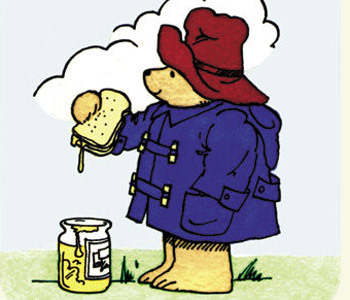
The other key aspect to bears is that they are simple pleasure seekers. Bears in fiction live for honey (Winnie the Pooh), humour and friendship (Fozie Bear) and just the “bear” necessities of live (Balloo in Disney’s Jungle Book). We often represent a bears’ life as idyllic. Even Coca-cola and Bundaberg rum play on the chilled out existence of a bear in their ads. Given that bears are omnivores with no non-human predators it’s not a completely fantastic rendition. I think in our status-orientated, goal-focused and time-limited culture it’s a lifestyle we ought to celebrate more. Bears are not workaholics and they don’t do gyms.


I agree it is funny that I idolize all these bear qualities. I am playing up to an aspect of myself that both charms and infuriates some people who know me – a love of comfort and lack of career ambition. Then I am wrapping all that up in poorly understood mystical language using children’s books as references and even the Muppets as scripture. Besides all that I’m not really the body shape to be a bear, my shoulders aren’t broad enough, so there’s a physical comedy playing out too. It’s cheeky and silly and low brow in a good way. Let’s laugh away.

The second reason my totemic appreciation of the bear gets chuckles though is less cool. I think it’s because it’s identified with a group of people who get sneered at in Australia. The stereotype of non-aboriginal people into totem animals in Australia would be our working class whites – “white trash.” This class ranks only above aboriginal people and new migrants in who gets shat on by our government. When this crowd wear an airbrushed wolf t-shirt or a full-back tiger tattoo its viewed as a tacky approach to other cultures as “exotic” and “wild”; it’s read as “never traveled further than the flea markets”.


It’s true that it’s tacky to just pluck a totem animal out of a foreign ecosystem without any awareness of the cultures that have traditionally interacted with that animal. However and this is a bold claim (so I’ll bold it), it is a continuation of the dismissal of certain cultures as primitive that is behind a dismissal of animal totems rather than a desire to protect those cultures by looking down on a partial use of their symbolism and concepts. I say this because the purpose of the chuckle over totem animals is not to deepen conversation or encourage further learning but to end it. Therefore it makes more sense as an unwitting legacy of pejorative attitudes to animism than an advocacy of taking animism seriously.

We definitely don’t honour other spiritual practices by leaving them alone with a chuckle. I know people who love Tai Chi but have yet to study Daoism, same with Yoga and Hinduism, Karate and Shinto, Gospel and old time Black American Christianity. These class appropriate appropriations get a free pass however.  They don’t suffer from a general objection to ripping off other religious traditions for our spiritual benefit. If anything they are applauded as a step in the right direction towards understanding. Yet while old church furnishings are very cool at the moment totem animals are less so. Is it any surprise that this is a distinction that echoes the prejudices of our past rather than challenges them?

I don’t mind sharing the “white trash” label if having a totemic appreciation of an animal puts it upon me. Australia is a class ridden country but whether you are upper class or working class or a lumpen-proletariat is no indication of whether you have “class” in the sense I care about. Kind, humble, ambitious in love and with a hunger for knowledge is my kind of classy. I use philosophy to recognize sophisticated and academically trumpeted ideas in what people are saying who lack the jargon to express themselves in that way. What I find is that good ideas come from people who spend time thinking. People who already believe they know best seldom do such thinking, hence the truism that you have to first be a fool to become a sage.


One way the closed mind of the clever operates is to limit the list of what constitutes a spiritual question. How the universe began, where you go when you die, whether right or wrong are absolutes, are all legitimised spiritual questions. These are also very academic questions requiring proper study of serious theological and philosophical positions. Woe to anyone who thinks they can just answer such questions by taking a stroll. By contrast something like what is your favourite animal and why is considered a foolishness. They’re a child’s questions – not a scholar’s.

I, very seriously, would like to flip that distinction. One running theme of this blog is of the unimportance of the official canon of spiritual questions in particular the chief one – whether or not God exists. Answering that question tells us about our situation but not necessarily about how we should respond. In contrast a “foolish” question like what animal inspires us does actually speak to the core of all spiritual concerns; how do I live my life? Kids get this. I thank the kid in me for still getting it. Considering the bear is more relevant to me than any genesis or evolution debates.

None of this is to say that there is nothing to criticize in terms of our use of totemic animals in popular white culture. Traditional uses of totemic animals have a strong valuation of a diversity of gifts. There are no “bad” animals and nor are there ideal ones. The rabbit and the snow leopard are equals. That is important because in mirroring our totems individually we collectively mirror the ecosystem which benefits from all its members and we recognize different tools for survival which benefits our tribe. This is forgotten when this spiritual practice gets intermingled with capitalism – both its mass production and its competitive nature.

The sort of animal totemic system we end up with under capitalism is a glorification of the top of the food chain predators. Wolves, sharks, tigers and yes, the bear, all get a lot more love than other animals. Further we distort those animals to suit our own psychoses. The wolf is a pack animal who must work with their pack members to hunt successfully. A lone wolf is actually an unhealthy animal whose lack of socialization has led them to be expelled. Despite this the lone wolf is a celebrated animal archetype because it suits our alienated and hyper-masculine culture. This should be pointing us to something wrong with us.

We don’t notice the problem with a lot of people empathizing with lone wolves (or generally predators at the expense of every other kind of animal) because we aren’t adopting animal totems to guide us – to write over our lives. What we are doing is instead writing on to animal totems our own indulgences. I am guilty of that myself given how much I am celebrating a cartoon version of the bear rather than the real deal. This leads to the reverse of what animal totemisation is supposed to do. It’s supposed to temper our own excesses by giving us a companion spirit to walk with. There’s supposed to be challenges for us. It’s not a blank check to be a sociopath by saying “I’m a rabid dog.” Rabid dogs get put down is the lesson there.

One way to correct this is to deepen our relationship with real animals. I made it a mission of mine to actually see a bear in the wild. For a few minutes I was closer to a black bear than any other human at a tip in rural Canada. There were no fences in between and while it was mildly dangerous it was also one of the most cherished experiences of my life. That is out of reach for many Australians but we can all learn more about bears. We can learn about threats to their habitat and freedom as well. When I was doing work-for -the-dole I met a guy who even though he was on unemployment benefits himself donated to charities that freed bears in captivity. That’s deepening the relationship too. 


Forget bears though, there are animals all around us. My dog is at my feet at the moment and our yard is full of birds. Is it really so laughable that they might have something to teach us? Have we crawled up our collective human ass so much that allowing ourselves to be taught by an animal is foolish to us. Well, first the fool, then the sage.

Grrrr.


Wednesday, June 20, 2012

A moral world.

This is a somewhat wacky post. People who know me will realise that feeling the need to disclaim that must mean we have a doozer of a wacky post. I hope you enjoy it.


What does an ethical realm look like?

I’ve been pondering lately the idea of morality or ethics as a language that describes an entire world in a similar way to how physical descriptions describe a physical world. Morality would describe a world composed of moral objects rather than physical objects. Moral descriptions would have certain characteristics just as physical descriptions do.  The fun of this exercise for me is that it illuminates certain assumptions I hold about morality or ethics and it raises some intriguing questions.

What are moral objects?

Physical objects are three dimensional, four if you count time. By that I don’t mean that physical objects really are four dimensional. I’m not talking about reality here. I am talking about a model or a grammar and vocabulary. A physical description of something draws on four dimensions; height, length, breadth and duration. To physically describe a table I might also describe its weight, density, the strength of its molecular bonds and so on. I wouldn’t describe the tables’ kitchness or quaintness. Those qualities lie outside the language of a physical description.  Physical objects are what you create by describing a world by its physical qualities only. In fact I’m happy to treat description and object as effectively interchangeable for this post.

Moral objects then are what we get when we describe the world by moral characteristics only. Can this include things? Can a table for example be good or bad? Can it be honest, righteous, valid, justifiable? Or for that matter can it be evil, wanton, invalid or wrong? My instinctual feeling is it can’t be. My instinctual feeling is that moral objects are acts – the act of building a table or destroying one or sitting on one can be moral – but the table itself is amoral. As an amoral object the table itself has no existence in a morally defined world in the same way that non-physical objects have no existence in a physically defined world. So the first rule of a moral world is that verbs are the new nouns – acts are objects here.


What are moral characteristics?
How do we measure or describe morality? What are its fundamental dimensions? I’m going to propose three. Just like the physical descriptors mentioned above there can be many more characteristics (weight, density, combustability even) so this isn’t the limit of our conversation.
Further its possible to just use one of these descriptors, just as its possible to describe a table by just its height. Such a description is just a poorer definition of the object but as no description is totally complete there can be no objective minimum either.

  1. Harm and beneficence.
As I mentioned in a previous blog post Harm and beneficence has to be measured against some sense of the ideal. Building a casino on the top of Ayers rock for example or chopping off my healthy leg seem obviously harmful only because we have an obvious ideal. This makes this characteristic interestingly dependant on a broader context and ideas. Also as I mentioned in another post it is necessary to have a sense of a moral person (which could be an environment as well) to establish where chains of harms and benefits end.

  1. Honesty or Sincerity and Duplicity
The notion that a person is trying to do the right thing is deeply fundamental to our conversations about moral actions. This comes up when adults try and understand their parents who in a different time may have had different ideas of right parenting. We can say that their choices were wrong (to us) but still moral given the knowledge they had. Likewise we can recognize that in our own parenting we can only try and do the right thing.
In making that attempt we can be honest with ourselves or we can try and sell ourselves a line. It can be hard to know which we are doing but I think we still want to and need to talk about it. The words we use are honesty, sincerity and integrity.

  1. Humility
It seems strange to hang humility out there on its own however I couldn’t quite describe the broader category it belongs to. It may be that it can be covered in the first two descriptors as well. For me though it does stand alone as a necessary corrective to both unfettered beneficence and sincerity.
Sincerity on its own has produced such romantic excesses as philosophers called crimes of pure reason. Those who flew into the world trade towers committed acts of absolute sincerity. Humility could have stopped them.
Likewise the worst tyrannies justify themselves on the basis of looking after others. The victims of the Chinese Cultural Revolution can attest it is a terrible thing to live in a proposed utopia. Even in smaller matters humility prevents beneficence from being something immoral. Beneficence without humility is when your mum puts holes in your condoms because you’d make a great dad.

How stable are moral objects?

We understand that physical characteristics are relative. The weight of a table is not inherent but a consequence of gravity acting on the tables mass. That’s pretty simple; on the moon the table weighs less. More confusing Einstein showed that the tables’ existence in time stretches and contracts depending on its movement relative to its surrounds. Do I know what this means? Not entirely. My guess is that it means the tables’ duration, just like its weight, is a perception that only makes sense in a context in which we too are present. When you think about it it’s not that surprising that duration (time) is basically a relationship between the table and the rest of our perception. 

The upshot of this is that our physical description of the table is not consistent for all situations. However as long as we don’t take it to the moon or launch the table at light speed we should be able to infer a particular table from the same physical description reliably and repeatedly. We can say that the words used to physically describe a table usually stay meaningful most of the time.

Subatomic particles however are much less stable physical objects. The physical characteristics of one of these tricky blighters are (so I’ve heard) “all over the shop.” Weight, speed, location and even existence change constantly. Each characteristic is highly interdependent on the rest and on the very act of observation. We are still trying out new vocabularies in order to have meaningful conversations about these objects.

It seems to me that the moral descriptors I have proposed produce moral objects that are also inherently unstable. Beneficence and harm are very situational while honesty and duplicity are subjective and evolving with our own self-awareness. Humility is the worst of all because it is interdependent with what we imagine we don’t know. That’s a floating parameter of the floatingest degree.

I’m about to cook up a piece of chicken for my lunch. Is that a moral, immoral or amoral action? How permanent is that description? It’s very likely battery hen chicken (no label either way) and purchased quite cheaply. I was intending to give it all to the dog but now intend to shallow fry a piece for myself. It’s very unhealthy and dirties a whole pan. Is this clearly a red light bad thing or does it flicker? Does it matter that I am sooo hungry and I’m finishing off something open in the fridge. Does it matter that having written this paragraph I am more aware than I would have been about my action? If a butterfly flaps its wings in an Amazon rainforest would we have to recalculate the moral weight of my action or am I just being silly?

How do moral objects relate to each other?

In physical descriptions we try to understand how one physical object impacts on another. In fact it’s worth recognizing that physical objects only make sense inside a lattice or web of forces that produce those objects. There is no table in isolation because without its current temperature and atmospheric pressure its atoms would behave differently. At least on a subatomic level there are constant exchanges between the table and the surrounding environment. Physical objects are not distinct or independent phenomenon.

Having now eaten the chicken what does my entire moral world look like? What is the impact from one moral object to another? If moral objects have the instability I mentioned earlier then it’s sensible to imagine that proximity to each other will result in shaping and reshaping of each other. If anything as I’ve described them moral objects are more interdependent and indistinct than physical ones. We can imagine a relationship between them.

The first word I think of to speak of a relationship between moral actions is karma. However karma is not a moral word itself. In fact karma is a way of talking in a particularly amoral way about moral actions. Karma isn’t “right”, it just is. Given that amoral objects are excluded from our moral world then amoral forces like karma would seem to have no place either. Karma, although it is about moral objects, belongs in a physical or metaphysical world rather than a moral one.

Particularly moral forces that tie together moral objects might include duty or obligation or debt. If an action can produce a debt which changes the morality of other actions then this is as if a moral object has affected the characteristics of another moral object.  That’s like a physics of morality. “How are debts between actions produced and cancelled?” is a fascinating question (not for this post though).
We don’t have to make the leap to assume that all debts must be cancelled. Maybe debt is the fundamental energy of a moral universe and if it gets extinguished then we obtain stasis – only an ideal state if you like it. It might be more interesting at least to pass debts on and around – to create states of high moral energy as well as low moral energy.

An artists challenge.

There are many points at which you may disagree with how I’ve pictured this ethical realm. Just like when we talk about physical objects two people can see two very different tables based on what’s important to them. You might even disagree that moral objects are only actions. Perhaps certain physical objects are for you sacred or profane in and of themselves.

An even more pivotal point of disagreement is on the usefulness of imagining an exclusively moral realm at all. I personally have enjoyed this as a thought exercise. I’m not committed to a moral realm as anything other than a way of exposing to myself my own moral language.

If you also found this a fun exercise I would love to receive links to pictures of how you see the moral world. If you want you can send me the pic itself and I’ll put it up alongside any others in this blog. I’ve been thinking lately the visuals of this site are a bit poor and I know too many talented artists for that to continue, surely.

So what do you think, can we do it? Can we picture moral objects interacting with each other and thus creating their world, a world we operate on in parallel to our physical one? Can we show each other what we see? Or has this blog finally gone off the deep end after a little too much Dr. Who? I’m not completely sure myself.

______________________________________________________________

Kudos to my friend Daniel for thinking outside the box and suggesting the following representation of a moral world. Also fluffy.


Friday, June 15, 2012

God: What are we talking about?


When you say God do you mean a phenomenon or an honorific? The difference has profound implications but can go unnoticed. It’s a question for both non-theists and theists; which one you don’t believe in is as interesting a question as which one you do.

In the Book of Exodus Yahweh commands the Jewish people “You shall have no other Gods but me”.  Yahweh isn’t trying to say that there is or there aren’t other Gods. The use of God in this instance is as a title of the highest esteem, an honorific. In that meaning there are obviously other Gods – the Egyptians have some as do the Persians and so on. It’s akin to Yahweh saying his people shall have no other lover but them. That doesn’t mean other possible lovers don’t exist. Yahweh is simply saying that they alone are who the Hebrews should worship as God.

By my reckoning when theists say they believe in God they are usually referring to the phenomenon of a God. The theist is describing reality, that is a series of facts, such as the world was created by a personality not just a process, it will one day be judged by that creator and so on. The notion that the personality in question is God is automatic because God is their concept that fits those facts. The theist is not generally imagining that anyone could agree with their description of reality but not call the creator and judge in question God. Instead they assume any disagreement they might have with non-theists will be about those defining facts.

When a non-theist says that they don’t believe in God they are usually using the phenomenological definition too. Hence non-theism might mean that there is no absolute creator or sustaining personality (or personalities) for the universe. Or Non-theism might mean that nothing is omnipotent, omniscient and omnipresent. In what ever way the non-theist defines the independent reality they call God, they are saying such a reality is a fiction.

What most non-theists (at least in the west) don’t mean is that no-one should be called God. They are not trying to make a political statement like an anarchist does when they say they don’t believe in government. Most non-theists are not objecting to the honorific of God being used for the sort of thing that they don’t believe exists. To them the question is moot precisely because of such a beings non-existence. They are making a statement about reality rather than their own fidelity.

This is my observation; that most discussions about God are not using the honorific definition. This raises fascinating questions. I’d enjoy any response from non-theists or atheists; Do you have clear phenomenological criteria for what you mean by God? Are they rigid? At what point would whatever model of reality you believe in need to change before you would either begin or cease to use the word God in describing it?

Let’s imagine Raoul believes in an omniscient (all-knowing) God. If Raoul meets his God and he is told by them, “Of course I’m not all knowing. I can’t know the future because of free will,” is Raoul obliged to say that the person they are talking to is not God? Is omniscience a requirement of Raoul’s God or just a description? If the latter, why is Raoul’s God actually Raoul’s God then?

Alternatively let’s say a non-theist physicist discovers a sentience to the whole universe. One day she looks through a super microscope and the particles (in a wave in a string or whatever is down there) form the word hello. The next day the same word is written in the clouds of a distant cloud nebula. Is the physicist obliged to worship as God what they have found? Or is it possible to retain a non-theistic attitude to what meets the diagnostic criteria of God, a single consciousness spanning all space and time?

OHM, a God or not?
This is not all hypothetical either. We live in a time of all sorts of ideas in physics some of them sounding like a personality to the universe. We also live in a time when theology includes notions of a “weak” or powerless God, a god who can’t even oppose cause and effect. For that matter the idea of a God in principle, a prime mover who is now absent from the world, is part of the history of modern science. It’s almost an assumption of Newtonian physics. There are so many God-like ideas floating around some of which atheists believe in.

I sometimes wonder how we could replace the word God in our conversations with something like “the Flux”. It would require us to actually define the word a bit better, as no-one would think they already know what we mean. What if we defined it as something outside ourselves that defies objective investigation and has a positive impact on our life. We might find that a multitude of differences between non-theists and theists break down. We might find separate camps of combined theists and non-theists for the Flux or against it. We will also have disagreements on the appropriateness of reverence for the Flux. Should we submit to it or seek to control it or ignore it? Can we negotiate with it? Should we recognise any other Fluxes other than it?

All I am suggesting here is clearing up a language difficulty that no longer reflects the state of our thinking. It seems to me that it is quite possible for someone at an atheist conference to agree with the metaphysics of some theistic theologians. That is they could agree with all the statements each other make about reality, they just disagree about the use of the honorific God to describe the same thing. It’s possible to imagine a person who believes that the world is inherently indifferent and morally neutral, but who worships a broken cruciform love as a hope. The theist bestows the honorific of God on some aspect of a reality any atheist could accept. They are really a sort of theist/non-theist making a mess of these distinctions.

It is also certainly possible to imagine that the universe was created and is under some entities absolute intelligent control. You could call this a strong metaphysical theism. It is separately possible to conclude that such a force is not particularly “good” and to say on that basis they don’t deserve the honorific of God. This would mean you would have no God (using the honorific) even though you thought one existed! This would be a different type of theist/non-theist. Could such a person share a stage with someone who is a phenomenological non-theist, who straight out doesn’t believe in the existence of intelligent super beings? If not, why not? When we switch between using God as description of reality and as an honorific without noticing it, it is harder to answer these questions with any care.

Buddhism is often questioned as to whether it is atheistic or not. The original Buddha did not deny the existence of gods but said that they were not necessary for our enlightenment. This is to be non-theistic in the sense of God as an honorific but not necessarily in the sense of describing your metaphysics. The Buddha most likely believed in Gods but didn’t have one. I’m fond of that approach because it appeals to my existentialist ideals; no one can really judge you like yourself. No one else can truly give you forgiveness either. It also appeals to me for its agnostic metaphysics. I can never know for certain that God doesn’t exist but it’s not the point anyway.

However I am also often to be found sometimes sitting under the exact opposite tree. I really don’t believe in the sort of thing I would define as a God existing. I don’t believe in an uncreated omnipresent personality with a controlling moral interest in this universe. The world’s data just makes so much less sense to me with such a pilot at the helm. In that regard I am a phenomenological non-theist not just an agnostic. However I also worship and submit to something outside of myself. It is not by my criteria God but it is my god. Some days I call it the good or love or it’s just “that thing that knows that I enjoy loving and being good so I don’t have to fight it”. You know - that thing – my higher power. I can’t always find it but I know when I’m knee deep in it or miles from it. I have a god therefore in the honorific sense but not a belief in any Gods existence.

Death by Neil Gaiman, not real but a god.

Tuesday, June 5, 2012

The Questions.

(An explanation/encouragement of philosophy aimed at high school students)
One way of understanding philosophy is to say that it is about properly articulating certain questions and answering them - with a sense of urgency. These questions appear to the philosopher as great cracks in the ground we walk on hence the urgency to answer them. Having just watched the Dr. Who episode where the Doctor dies in the middle of the exploding Tardis I’m thinking the cracks in space and time that lead up to that event may be an even better analogy. To a philosopher approaching these unanswered questions is very much a feeling of being unmade. The philosopher can imagine that their work is sealing the cracks and saving the multiverse, just like the good doctor.

How can we know anything? This is possibly the question of supreme importance. This is a crack right across space and time. If we don’t answer this then we can’t answer anything else either, at least not with certainty. The philosopher is the one for whom the lack of a very good answer to this question threatens their whole fabric of existence. “How can I make any choices if I don’t know anything?” they beg of a night of vanishing stars.

Unfortunately “How can we know anything?” is a paradoxical question. It can’t be answered. To explain, let’s say that we know things by intuition. Our intuition doesn’t have to be perfect. It can make mistakes. Perhaps what we thought was certain dread was only indigestion. But over time it corrects itself. Following that inner voice is therefore a long and circuitous road to truth perhaps but it’s a road heading in that direction at least.

That’s a cracking theory. There would be no problem creating a fictional character for whom that theory holds all story long. I would enjoy that story. However is it true? In the story is the character wise or mad for following their intuition? Unfortunately we can’t establish that. The source of knowing in this story is intuition but intuition can’t tell us whether intuition can be trusted, it can’t verify itself.

The same is true if we base knowing off of our senses, our logic, or a group vote of everyone with beards or no beards. The same is true if we base our knowing off of the revelations from our experience of God. Or off of a combination of these matters. None of these sources of knowledge can verify themselves. If they are undependable then their verification is undependable too.

In our example of a story it at first seems easy to prove our fictional character mad or wise because we have an objective describer of what happens. We have an author. However an author’s only power to describe is in their reader’s beliefs. Consider the story of Brave New World. It describes an entirely utilitarian culture, complete with people deliberately brain damaged in vitro in order to suit them to repetitive, uncreative work. There is less job dissatisfaction that way.  If this is dystopian to us then that dystopian assessment is a product of our beliefs rather than anything inherently in the story. We already knew that that was “bad” going in to the story or we won't know its bad when the author describes it.

That isn’t to say that story telling can’t sway us. Babe, the movie, puts the case against bacon clearly. The Bible similarly has a fairly scary ending for people who don’t follow God. But at the end of the day if we don’t share the authors’ assumptions about reality then we don’t agree. There is no escape from our question by route of an author’s authority. After all “How do we know what authority to trust?” is just a rewording of the question, “How can we know anything?”

You may be thinking that philosophers are just maladjusted individuals at this point and I think that is not a bad description. All this fretting over the fundamental grounding of our truth claims is exactly the behaviour of someone with anxiety and an inability to avoid overly concrete thinking. I think philosophy is attractive to that part of me. However before we bring out the chamomile and anti-depressants it’s worth noting that the philosopher (in us even) is merely pre-empting those moments in all our lives when the cracks in space and time loom large. Maladjustment is not always somewhere to avoid.

Consider the Pentecostal kid who finds they are dealing with same-sex attraction. The source of truth and knowledge is not an abstract question for them. It is at the heart of their immediate life. Consider the victim confronted by their traumatic feelings after being mugged. When the pills still don’t get them to sleep how do they restore their sense of safety? Should they accept they can’t?

These are moments of profound maladjustment and they should be. Sheesh, if life’s curveballs are just going to pass you by while you strike out without any re-evaluation of your swing then I’m not sure I understand you. I’m a big fan of saying that the unlived life is not worth examining. However how is life being lived either if nothing ever forces you to re-examine yourself? I’m honestly unsure how anyone could avoid “maladjustment” all life long. If they do are they lucky or to be pitied?

Still if the primary uncertainty of how anything can be known is an unsolvable paradox what good can looking at this question do? After a brief spell wandering around in a horse hair shirt with Nietzche in our back pocket won’t we eventually return to the valerian and television anyway? I think that makes the mistake of thinking that we are actually looking for a specific answer whereas what we need is just an honest way to live. The philosopher is trying to hold the universe together not aesthetically but so as to function in it.

These are a few principles I’ve gained from my own journey. That’s an ongoing journey by the way. They may not satisfy you but I think they have potential to guide me for the rest of my life. I don’t think you could call them answers, certainly not to the original question. They allow me to function.

Firstly I have accepted that we have to make a radical choice or leap of faith at our initial point. We can develop our intuition, study the data, choose to follow experienced counsel or a combination of the above but only after we have made some poorly founded choice about what is real and what is not. That choice might alienate us from our peers or even our family though it will probably connect us to other people too. That’s painful especially because we don’t have a casual basis for that very initial decision. We can't convince others to join us. We only have a projected hope.

Secondly it’s doesn’t feel like a choice. It feels more like you’re holding your guts in until you make your decision and then when you do your innards just come rolling out as if from a gaping belly wound. Gross, I know but it is gross. It’s your stink. It’s messy and it’s very mortal. There is potentially no stuffing it back in.  It’s that dualism of a conscious choice and just being yourself for the first time that is coming together here. Yet our knees ought to knock with fear that it’s the stupidest thing we’ve done too because we can get that feeling as easily as we are sentimental.

Thirdly our decision is not really about what is true but about what is important to us. We ultimately answer “How can we know?” with “Why do we want to know?”; “Do we want to be happy? Do we want to fit in? Do we want to never be frightened?” We have to get down to what is our search for knowledge for. If we want to avoid sensory harm (like the pain of a pylon in the head) then sensory input (like looking out for pylons as we drive) is likely the key. If we want pleasure, or justice or connectedness then we will need more awareness of those aspects of ourselves and life. What are our goals?

Fourthly nobody else can force our hand to touch the cracks in space and time. We have to reach forward of our own accord. Definitely no-one else can go mad and get sane for us. There’s some shared characteristics but also some unique ones when a person gets unmade. More importantly any resilience to my outcome has required taking personal responsibility for it. I would be wary of someone who says they can do it for us.

Finally though, other people are not useless to our questioning at all. Friends and family can anchor us to the mundane with love. I can’t tell each of you what will come of your embrace of the cracks but I can advise long walks in dry socks and against too much drugs. Remember the Doctor has companions. They have lives and families and gardens and shopping bills in one dimension and one town on earth. Don’t ever get so haughty in your big ideas and dangerous self exploration that you doubt their importance to you.

I'm a big Rory fan by the way.