Showing posts with label animals. Show all posts

Thursday, June 28, 2012

Bear with me.

I enjoy being foolish. I particular enjoy it when people have a good natured chuckle at my more un-testable beliefs. It was in that spirit that I was talking about the bear as my totem animal to some friends some time ago.


Why is that humorous? Well firstly because I am not sophisticated or particular. Grizzly or black or sun or even polar – though I stop short of panda or koala – will do despite their significant differences. My empathy with bears comes from pop–culture rather than careful study. In fact my favourite bear is Fozzie from the muppets, followed by Balloo from the Jungle Book. I was also a huge fan of Grizzly Adams in my youth with a well read copy of the novelized TV series a constant refuge.

For me the bear is a symbol of quiet strength – a strength that doesn’t need to prove itself. I think of bear like people as gentle giants – confidently able to decline challenges but capable of decisive action when necessary. I am not saying this is me. Instead this is something I aspire to be – something I have always tried to let inspire me. I’m more bearlike than I used to be.

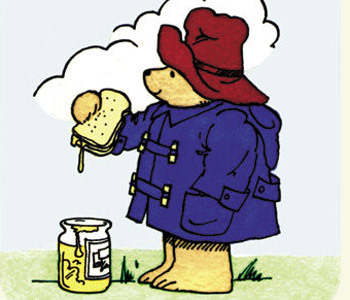
The other key aspect to bears is that they are simple pleasure seekers. Bears in fiction live for honey (Winnie the Pooh), humour and friendship (Fozie Bear) and just the “bear” necessities of live (Balloo in Disney’s Jungle Book). We often represent a bears’ life as idyllic. Even Coca-cola and Bundaberg rum play on the chilled out existence of a bear in their ads. Given that bears are omnivores with no non-human predators it’s not a completely fantastic rendition. I think in our status-orientated, goal-focused and time-limited culture it’s a lifestyle we ought to celebrate more. Bears are not workaholics and they don’t do gyms.


I agree it is funny that I idolize all these bear qualities. I am playing up to an aspect of myself that both charms and infuriates some people who know me – a love of comfort and lack of career ambition. Then I am wrapping all that up in poorly understood mystical language using children’s books as references and even the Muppets as scripture. Besides all that I’m not really the body shape to be a bear, my shoulders aren’t broad enough, so there’s a physical comedy playing out too. It’s cheeky and silly and low brow in a good way. Let’s laugh away.

The second reason my totemic appreciation of the bear gets chuckles though is less cool. I think it’s because it’s identified with a group of people who get sneered at in Australia. The stereotype of non-aboriginal people into totem animals in Australia would be our working class whites – “white trash.” This class ranks only above aboriginal people and new migrants in who gets shat on by our government. When this crowd wear an airbrushed wolf t-shirt or a full-back tiger tattoo its viewed as a tacky approach to other cultures as “exotic” and “wild”; it’s read as “never traveled further than the flea markets”.


It’s true that it’s tacky to just pluck a totem animal out of a foreign ecosystem without any awareness of the cultures that have traditionally interacted with that animal. However and this is a bold claim (so I’ll bold it), it is a continuation of the dismissal of certain cultures as primitive that is behind a dismissal of animal totems rather than a desire to protect those cultures by looking down on a partial use of their symbolism and concepts. I say this because the purpose of the chuckle over totem animals is not to deepen conversation or encourage further learning but to end it. Therefore it makes more sense as an unwitting legacy of pejorative attitudes to animism than an advocacy of taking animism seriously.

We definitely don’t honour other spiritual practices by leaving them alone with a chuckle. I know people who love Tai Chi but have yet to study Daoism, same with Yoga and Hinduism, Karate and Shinto, Gospel and old time Black American Christianity. These class appropriate appropriations get a free pass however.  They don’t suffer from a general objection to ripping off other religious traditions for our spiritual benefit. If anything they are applauded as a step in the right direction towards understanding. Yet while old church furnishings are very cool at the moment totem animals are less so. Is it any surprise that this is a distinction that echoes the prejudices of our past rather than challenges them?

I don’t mind sharing the “white trash” label if having a totemic appreciation of an animal puts it upon me. Australia is a class ridden country but whether you are upper class or working class or a lumpen-proletariat is no indication of whether you have “class” in the sense I care about. Kind, humble, ambitious in love and with a hunger for knowledge is my kind of classy. I use philosophy to recognize sophisticated and academically trumpeted ideas in what people are saying who lack the jargon to express themselves in that way. What I find is that good ideas come from people who spend time thinking. People who already believe they know best seldom do such thinking, hence the truism that you have to first be a fool to become a sage.


One way the closed mind of the clever operates is to limit the list of what constitutes a spiritual question. How the universe began, where you go when you die, whether right or wrong are absolutes, are all legitimised spiritual questions. These are also very academic questions requiring proper study of serious theological and philosophical positions. Woe to anyone who thinks they can just answer such questions by taking a stroll. By contrast something like what is your favourite animal and why is considered a foolishness. They’re a child’s questions – not a scholar’s.
I, very seriously, would like to flip that distinction. One running theme of this blog is of the unimportance of the official canon of spiritual questions in particular the chief one – whether or not God exists. Answering that question tells us about our situation but not necessarily about how we should respond. In contrast a “foolish” question like what animal inspires us does actually speak to the core of all spiritual concerns; how do I live my life? Kids get this. I thank the kid in me for still getting it. Considering the bear is more relevant to me than any genesis or evolution debates.

None of this is to say that there is nothing to criticize in terms of our use of totemic animals in popular white culture. Traditional uses of totemic animals have a strong valuation of a diversity of gifts. There are no “bad” animals and nor are there ideal ones. The rabbit and the snow leopard are equals. That is important because in mirroring our totems individually we collectively mirror the ecosystem which benefits from all its members and we recognize different tools for survival which benefits our tribe. This is forgotten when this spiritual practice gets intermingled with capitalism – both its mass production and its competitive nature.

The sort of animal totemic system we end up with under capitalism is a glorification of the top of the food chain predators. Wolves, sharks, tigers and yes, the bear, all get a lot more love than other animals. Further we distort those animals to suit our own psychoses. The wolf is a pack animal who must work with their pack members to hunt successfully. A lone wolf is actually an unhealthy animal whose lack of socialization has led them to be expelled. Despite this the lone wolf is a celebrated animal archetype because it suits our alienated and hyper-masculine culture. This should be pointing us to something wrong with us.

We don’t notice the problem with a lot of people empathizing with lone wolves (or generally predators at the expense of every other kind of animal) because we aren’t adopting animal totems to guide us – to write over our lives. What we are doing is instead writing on to animal totems our own indulgences. I am guilty of that myself given how much I am celebrating a cartoon version of the bear rather than the real deal. This leads to the reverse of what animal totemisation is supposed to do. It’s supposed to temper our own excesses by giving us a companion spirit to walk with. There’s supposed to be challenges for us. It’s not a blank check to be a sociopath by saying “I’m a rabid dog.” Rabid dogs get put down is the lesson there.

One way to correct this is to deepen our relationship with real animals. I made it a mission of mine to actually see a bear in the wild. For a few minutes I was closer to a black bear than any other human at a tip in rural Canada. There were no fences in between and while it was mildly dangerous it was also one of the most cherished experiences of my life. That is out of reach for many Australians but we can all learn more about bears. We can learn about threats to their habitat and freedom as well. When I was doing work-for -the-dole I met a guy who even though he was on unemployment benefits himself donated to charities that freed bears in captivity. That’s deepening the relationship too. 


Forget bears though, there are animals all around us. My dog is at my feet at the moment and our yard is full of birds. Is it really so laughable that they might have something to teach us? Have we crawled up our collective human ass so much that allowing ourselves to be taught by an animal is foolish to us. Well, first the fool, then the sage.

Grrrr.


Wednesday, May 2, 2012

It's O.K. to kill.


To kill is OK. It is almost universally permitted, sanctioned and even rewarded. Even outside of war. Even without any genuine self defence. Death can be cruel and prolonged if that’s what it takes. Convenience is the only concern.

What’s interesting is how some minds effectively leave the room in complete disinterest when I explain what I mean by this. Objectively we have to consider that one possible reason for taking the door of disinterest on this issue is a flight from responsibility. That alone should cause us to pause to justify ourselves. Yes, I am trying to keep you reading by insinuation here, but I am also referring to myself and my motivation for writing this post.

The killing I am describing in my first paragraph is the killing of mice. I’ve killed mice, you’ve probably killed mice. We kill mice routinely and in droves merely in order to protect the large scale farming of grains that sustain our concentrated human populations. So unlike whales and cows and pigs even vegans and vegetarians are responsible (albeit indirectly) for killing mice.

Because of our general complicity “Is it actually OK to kill mice?” is probably not going to be a popular question to ask, but it is a pertinent one. At least, it is if we are interested in doing what is right, being good and all of that.

To begin, we should probably establish if it is wrong or right (or anything moral) either way to kill anything. This really isn’t that easy to do in a strictly logical fashion; death comes to us all after all. It’s absolutely impossible to call good or bad in terms of broad effects the death of all the people in the world trade towers in 2001, in the tsunami of 2004 or of smoking related diseases in the last week. No matter how profound each persons dying was, once we leave our solar system or our century the ripple of those deaths vanishes. While we gauge from empathy that those deaths were probably bad for them (the dead) and for their families we can’t really say they were bad in an absolute permanent sense. This is one of the ways consequentialism has always failed me as a moral system. Take a long enough or wide enough view and any actions consequences are swallowed by sand.

How much more so when we think of the death of mice, which reproduce so rapidly that to kill two hundred in a plague is to make a sword cut in the wind. There really seems to be a negligible impact only one year on from whether we kill a single mouse. The universe doesn’t shudder. Nobody eulogizes another nameless extinction. But if consequentialism is useless when applied to humanity I can’t see why it is acceptable when applied to mice.


Ethical systems make more sense when they elevate to a greater than numerically deserved significance the effects of an action on an individual. This is still consequential but not eternally so. Instead we stop our chain of consequences at the person whom we declare to be an end and not a means. The issue we have here is whether we stop only at human persons or if the mouse is a “person” in the same regard. If the former is the case then killing mice is only an issue in its effect on humans. We have then rejected all language to say why the slow torture of a mouse, the gleeful killing of mice or the extermination of all mice might be wrong. When we say morality assumes humans as the only moral end then all bets are off regarding the non-human mice.

Yet there is no clear reason why any difference between a human and a mouse renders one a moral end and the other a mere means. Whatever differences we draw between us and mice it is obvious they are merely self-serving. Mice are less intelligent than us but only if we define intelligence so that it is represented by our own strengths like symbolic representation. If we measure intelligence by maze solving then many humans are dumber than mice. Further, within the human population we consider degrees of intelligence (however measured) to be unrelated to whether you are a moral ends or a means. It is therefore just a convenience to apply this distinction to mice. There’s certainly no easy logical connection.

One attempt to make a logical connection between a human type of intelligence and moral personhood is in our ability to reflect on and be “spiritually” affected by our suffering. That is to say that we have the capacity to feel degraded, humiliated, or otherwise wronged by the thought of being killed by another human. A mouse merely feels they will be dead. I think this makes for a very interesting moral philosophy. I think if we follow it carefully it leads us away from any distinction between killing people and non-people into a distinction based on different types of killing. Consider a human that is killed by a lion versus a human that is betrayed by a friend. Both victims have the moral status of people and both are killed but only one is actually “wronged.”


One problem is that we are completely presuming that we are incapable of “wronging” the mice. Basically we are claiming to be able to be “moral lions” to them. That would be fair in as much as we do nothing to encourage a theory of mind in the mouse regarding us. However what if we don’t? What if the mouse is a pet or a lab mouse that we feed?  Could such a mouse feel betrayed by us?

Furthermore whatever the mouse believes, we know that we are not lions. We have a theory of our own mind. It seems to me that once we actually allow ourselves to voluntarily occupy the position of a wild beast without moral guidance then we are no longer in possession of a morality at all. Unless we retain moral responsibility for acting amorally (which negates the amorality of that state) then we are essentially “moral lions” at all times. To have a morality is also take responsibility for switching it off.  Then we still have to decide why we can become lions with mice and not with people.

When I’ve posed the question of “Is it OK to kill mice?” people have often struggled to answer (no doubt unaided by me giving them no warning). Generally they have reflected my own sheepish feeling that we stand on shaky ground around this issue. The most confident responses have been unsurprised by the lack of any neat systematic justification for killing mice but not humans. For them this is an unremarkable consequence of what morality actually is.

Indeed our problems answering this question are a good argument that morality isn’t any kind of system at all. By system I mean something where each law within it reinforces each other law in a logically consistent way. Instead morality looks like something hobbled together to suit various agendas; an improvised social contract. In such a picture our own genetic interest is at the core. This puts our children first, followed by the rest of our species, followed by those animals that are useful to our species. Morality only pretends to have universal laws because such pretence is more effective propaganda for itself. Essentially it is O.K. to kill mice because we are not mice. If that doesn’t sound like much of a morality to us it’s because we are aiming for a false standard of absolute moral truth.

I agree with this assessment however I also believe that morality is something else at the same time. This something else helps us to explain why sometimes less efficient social contracts are more appealing to us than others, and why morality includes many rules which don’t seem to benefit our species directly. It also helps us understand why any part of us might consider killing mice wrong in contradiction of our self-interest.

There are ways of seeing that cannot be reached by study or argument but that come out of ways of doing. This can raise the suspicions of a rational and empirical mindset which prefers to evaluate statements in an objective fashion. However there’s nothing miraculous in this idea. What we fret over when we are anxious is rarely removed as effectively by discussion as it is by cutting down the caffeine and getting some sleep. What we see when we are depressed may be altered by company and exercise and a willful rejection of self-loathing thoughts. It is seldom altered by a depressed person just thinking from their depression.

Perhaps due to our general utilitarian culture we tend to think in terms of X leads to Y. This would be a mistake when we think of how ways of seeing and ways of doing relate. We don’t just do in order to see like buying a pair of glasses. We don’t just relax in order to cure anxiety. That’s kind of impossible. We can only relax because it is the natural expression of having given up on anxiety already. You can’t do differently except from already seeing differently. Then your actions lead to seeing differently then back to doing differently and so forth. It’s an all-involving process.

Ways of doing that lead to and from ways of seeing have often been called “spiritual disciplines”. Buddhists call them practices. A practice may be meditation. A practice may be making a regular donation of income to charity. A practice may even be abstaining from killing mice. It is not right or wrong to meditate in any absolute sense. It is merely consistent with cherishing immediate reality. It is not right or wrong to kill mice either. It is merely a practice consistent with declaring a mouse a moral means.

Now I kill mice. I am however attracted to ways of seeing where a mouse is a moral end rather than a means; something with the status of a person or at least a kind of person. If I want to see in that way clearer then I have to treat the mouse as a moral end. There isn’t any other way to properly do this. I either occupy that vantage point or I don’t. A moral prescription regarding killing mice is simultaneously both the means to and path from such a sight.

Why is the way of seeing that doesn’t kill mice attractive to me? I’ve been pondering lately our search for intelligent life. Our efforts to find intelligent life in space are for me justified simply by the hope of marveling at it. It doesn’t need any further justification. It certainly isn’t justified in terms of benefit to my own genes. Yet it seems to me we should worry that we are not equipped to find our peers in space. Unless they are also human we are going to miss them.


Meanwhile we are potentially surrounded by such “persons” as magnificently different to us as the usually imagined creatures from outer space. If I want the delight of marveling at those persons I have to treat them as such. If I want to see them instead of continuing to miss them, I need to do as seeing them would entail. I wonder what considering other animals as more my moral peers might bring. I’m not sure this means that I mustn’t kill mice. That might even be impossible to avoid indirectly. But trying to avoid killing them when I don't even need to seems like a small start.

I’m going to leave it to you to consider how viewing morality as a practice might help illuminate other issues of killing. Obviously our attitude to killing mice can relate to our attitude to killing other animals whether for food or sport or to protect our lifestyle. I also think most discussions of the termination of a pregnancy or euthanasia have suffered for viewing morality as a system of consistent laws rather than a spiritual discipline. Indeed not just killing but all moral choices can be understood as ways of doing which take us to and come from ways of seeing.