I’m going to wade, a little, into the Safe Schools debate that in my last post I dipped my toe into. For those who don’t know the Safe Schools Coalition initiative, it can be divided into two things; a series of lesson plans and resources for high school teachers to discuss lesbian, gay, bisexual, transgender and intersex student issues, and recommended high school policies to support those students (found amongst the resources). To shrink the language of “lesbian, gay, bisexual, transgender and intersex” I will be referring to this grouping as same-sex attracted and gender-diverse.
Although in my younger years some attempt was made to put all the letters of LGBTI under the reclaimed word “Queer” that never took off. For one thing the word Queer became attached to the image of a white wealthy gay male, an inevitability of any singular identity perhaps in a world of ads chasing pink dollars. Many Lesbians insisted on their own particular identity, rather than existing as Queer’s “other”. Queer politics also had agendas that were broader than the LGBTI movement – sex-positivity for example – and whereas Queer tended to embrace Drag, some feminists saw this type of performance as offensive as “black-face”. Still Queer has an edgeyness that LGBTI lacks. Queer is a little more punk and post-normal. For this reason the term still finds favour today.
This old debate about the universality of Queer is an obscure element of history. If you lived through it and participated in it, it’s easy to imagine that everyone knows why Queer is not generally considered an acceptable umbrella term and why some people, despite this, still use it. I’m not showing off here. I never learnt this stuff. I was just involved in it. Ask me who won any of the Grand Finals through the 80’s and 90’s and I will have to guess because I wasn’t paying attention to that history.
This idea of niche and personal histories is crucial to understanding the debates and discussions around the Safe Schools initiative. Consider the example of the Tasty Raid in Melbourne in 1994. The proportion of same-sex attracted and gender diverse adults in Australia who know of this event will be huge. In fact it will be much higher than people who know about why we do or don’t use the term Queer, a largely academic debate. The Tasty raid and the subsequent suing of the Victorian Police was a big deal, but the people who remember it don’t all remember it because they are better historians. Many just remember it because it was about their lives. They either were caught up in it or they learnt about at the time through their networks.
A more chilling example of separate history was reported in an article titled ‘Sydney’s Shame’ (http://www.smh.com.au/nsw/sydney-shame ). This story reported on systematic gay bashings leading to deliberate murders around Sydney beats, and a culture of police reluctance to investigate. We’re talking here about people found dead at the bottom of cliffs with clear evidence of being assaulted first and the death being ruled as an accident. We’re talking about “fag-bashing” viewed as an ordinary activity to do with your mates. Again this is not necessarily something same-sex attracted and gender diverse people study in specialist classes. It is simply what some have lived through and many more have been aware of as they walk home. Even when these things are reported in mainstream media they become part of the consciousness of some readers and not so much of others.
Incidentally this is what women’s experience of the epidemic of violence against women is like. They hold their keys differently. Take out their phone. Stay close to the lights and avoid the alleys. Notice who is walking behind them. Of course therefore they remember more than men the history of this violence, including incidents of violence, poor political or police responses and community reactions. They will appreciate how every single Mardi Gras through the 80’s and 90’s came with a warning to keep yourself safe as you left venues because the gay bashers always stepped up their activities around that time. They will understand how that warning is a part of some peoples history of events. By the way, maybe they still give out that warning, but living in Bendigo with my family I don’t follow Mardi Gras news much anymore; again separate histories.
The relevance of all this to how Safe Schools is being discussed, is simple. Virtually every argument in support of the Safe Schools program refers to the history of same-sex attracted or gender diverse people, often incorporating the personal history of the author. The Safe Schools programs are seen as correcting for the systematic oppression that has been the life of same-sex attracted and gender diverse adults. My last blog did something similar – it drew upon my past. The past is very much present when supporters speak of the Safe Schools program. For them an ugly homophobic past is sitting square in the middle of the discussion.
Meanwhile the criticisms of the Safe Schools program are massively ahistorical. They may criticize the program based on its merits, or they may criticize what they have heard is the program based on the merits of that, but they are definitely not evaluating the program in a historical context. How was school for these critics when they were young? Irrelevant. How were workplaces or the media or the law as these critics were emerging into adulthood? They were fine, why would that matter?
Occasionally the past is brought into the conversation from some Safe Schools critics, but it is a fantasy past. It is in fact such a fantastic past as to make their criticisms even more ahistorical for mentioning it. In these pasts everyone is neighbourly and chaste, homosexuality is barely mentioned which one supposes means that same-sex attracted people barely existed, and children respect their parents because God is in the schools where He (sic) belongs. You don’t find this sort of fantasy past promoted by serious critics of the program, but it is there amongst the petition signers and the online angry. In this past there are no gay bashings or homophobia at all. This is why I consider it to be even more a denial of history than simply not mentioning history at all.
The tendency of the more serious Safe Schools critics is to blunt any historical special interest case by generalizing the focus from homophobic bullying to all bullying. In this way they mirror other ahistorical criticisms of other historical movements. On Q&A recently the head of the Australian Christian Lobby, Lyle Shelton responded to comments that same-sex attracted and gender-diverse kids are being bullied, with comments that all bullying is wrong for whatever reason. This is a copy of the white response to the hashtag Black Lives Matter with All Lives Matter. While technically true there is no knowledge of history in either response. It is as if presented with the Sydney’s Shame article the ACL would say “Well, all police corruption is wrong and nobody is condoning any violence here.”
This lack of recognizing their particular history frustrates same-sex attracted and gender diverse adults. Weren’t they just sharing their painful pasts moments ago? Were the ACL and their followers listening? This only gets worse when organisations like the ACL claim to be bullied, harassed and silenced today. It was not long ago that being gay was compared to smoking by the then public face and continuing chair of the board of the ACL. The concern the ACL have always shown has been very much like a concern about the uptake of smoking, to thwart any improvement in gay lives lest it encourage more people to take up being gay. Many consider them a source of homophobia.
But it’s not even a question of whether the ACL and its current head Lyle Shelton directly spread homophobia or not. The reality is that all the time Shelton was growing up and when he was a newspaper journalist and editor, when he was a city councilor and a state candidate and when he moved to the ACL, same-sex attracted and gender diverse people have been being bullied, bashed and murdered, fired from their jobs, kicked out of their homes and turned away from services. Not a single element of this history was ever confronted by Shelton as a journalist, editor, politician or lobbyist. Shelton either never knew about this history or never cared. Most likely it simply passed him by like AFL did me. He didn’t have to decide not to take an interest in it – he simply wasn’t involved in it.
Does it seem unfair to you to judge him for this? Does it seem irrelevant to his evaluation of the Safe Schools program? Maybe so in both cases but this is what I suspect is a part of the feeling of the supporters of Safe Schools. For them Safe Schools exists within a history that entitles the voices of same-sex attracted and gender diverse people to speak and disqualifies the speech of people like Lyle Shelton and the ACL. This is a shared feeling, by the way, from supporters of the program who are as heterosexual and cis-gendered as Lyle Shelton. It’s not a Queer thing to privilege Queer voices in this discussion – it’s a historically aware thing. Many even feel it is a human thing – to allow themselves to be silenced by the testimony of the survivors of violence.
Having spoken of the frustration of the Safe School supporters, let’s consider the frustration of its critics. In their minds they are making what they feel are rational arguments. Some of their arguments are not rational at all and some of them are wildly misinformed but some of them raise legitimate areas for improvement. If the filter of personal history is driving how Safe Schools supporters feel about the program and its critics, then they can be easily hostile to any criticism being made, almost regardless of the program’s content.
The Safe Schools program has been developed with the input of numerous same-sex attracted and gender -diverse young people. It has been implemented successfully at a range of schools including a Catholic school, a tiny country school and many large state schools. This all speaks to how useful and positive a program it is, but it’s still just a program. There are bound to be ways it can improve and mistakes that have been made. It seems to me that by being engaged in historical battles Safe Schools supporters are in danger of viewing all criticisms of the initiative as attacks on LGBTI people. That's not a healthy relationship to any program.
If this conversation about Safe Schools is to improve we are going to need people who can confront the history gap in our community. There are some examples of people who speak for conservative Christians who get the importance of history in this discussion and by that I don't mean a token nod to the problem of all bullying. Michael Jensen, is someone I disagree with on Same-Sex marriage but he recently made a long Facebook post which indicated his understanding of LGBTI history. It has since been published by the Huffinton Post. What is important about this post was that it never tries to subsume homophobic bullying or racist bullying under the generic title of all bullying. Instead it recognized that homophobic bullying occupies a particular place in our history and delivers a particular harm that can only be imperfectly imagined by those who didn't experience it. That's humility.
John Sandeman provides another example. He is the editor of Eternity Magazine, a Christian non-denominational publication and one which has defended ACL and taken a conservative stance on LGBTI issues. On the 25th of February this year he wrote an article for the Australian Bible Society website titled, ‘The SMH apologises to the Mardi Gras. What should Christians do?’ This was a genuine admission of the history of conservative Christians in denying basic freedoms to same-sex attracted people and in being involved in their systematic oppression.
Neither of these pieces of writing specifically mentioned the Safe Schools program although Jensen's piece comes close. Perhaps that enables their authors to be freer with their acceptance of the gains of the LGBTI movement for equality or perhaps even that it is to take their point too far. At least they start the conversation off on the right foot. We should all be able to acknowledge that Australian history is a brutally homophobic one and that this is not just more of the “general” bullying, violence or sinfulness of society. It is a specific problem with same-sex attraction and gender diversity that churches have fostered themselves.
From this point I think we should all be able to agree that some kind of program like the Safe Schools initiative is necessary and deserves the paltry eight million dollars that has gone into it. This will be a leap for some conservative Christians but I hope it is one they can make. As Stephanie Judd wrote for the ABC news site, addressing the ACL in particular:
“If you feel some Safe Schools content isn't age-appropriate, then isn't dialoguing with them for modifications to the program a better and more gracious approach than pitting yourself against them by calling for their wholesale defunding?”
Stephanie, whose byline indicates she attends an Anglican Church, goes on to say that “In the absence of a a satisfactory alternative that addresses the problem that Safe Schools was created to fix, the ACL's statements are going to continue to be received as harsh and unconstructive.”
So long as the critics of the Safe Schools initiative come at Safe Schools with axes of outrage rather than ideas for improvement they will seem to have very little idea of lives outside their own. We can see this in their ahistorical approach to the issue. So long as they propose no alternative at all or a generalised alternative that hides the special historical case for justice of same-sex attracted and gender-diverse people, they will seem to have no idea there is even a problem to fix. On that basis they are not going to be listened to and despite what they might tell themselves it won’t be because they are being bullied now. On the other hand, a proper discussion might be had if the examples of John Sandeman and Michael Jensen, both conservatives, have a genuine influence on their peers.
Showing posts with label homosexuality. Show all posts
Showing posts with label homosexuality. Show all posts
Tuesday, March 8, 2016


Thursday, June 27, 2013
A response to the end of Exodus International.

Slow down internet please!
This blog has often discussed the intersections of
spirituality, gender politics, and sexuality. News in that area has been coming
faster than I can process it. Or perhaps it’s merely because I don’t usually
follow current affairs so much that it feels this way. Just some of the
events:
- The
Police in
- A
large evangelical church planting network (SGM) in the
- The US
Supreme Court narrowly declares the Defense of Marriage Act as
unconstitutional, obliging their federal government to recognize same-sex
marriages from states that permit it. What relevance for
Exodus International is the largest umbrella organization in
the world for those who have historically claimed to heal people of same sex attractions. On June
the 19th 2013 Exodus International announced it is closing up shop. Their
president, Alan Chambers, issued an apology to the LGBT community for their
past assumptions and harm. Alan Chambers has for some time now been putting
some distance between himself and his previous public identity as an ex-gay
man promoting an ex-gay reality for others. In 2012 Alan Chambers stated that:
The majority of people
that I have met, and I would say the majority meaning 99.9% of them have not
experienced a change in their orientation or have gotten to a place where they
could say that they could never be tempted or are not tempted in some way
or experience some level of same-sex attraction.
Alan Chambers has also admitted that he is
himself part of the 99.9% he refers to. He
has apologized for falsely exaggerating the claims like those made in April
2004 and still published by NARTH (National
Association for Research and Therapy of Homosexuality), that:
“I used to be homosexual and today I am not.….I am one of tens of thousands of people whom have successfully changed their sexual orientation.”
“I used to be homosexual and today I am not.….I am one of tens of thousands of people whom have successfully changed their sexual orientation.”
In his apology Alan Chambers stated;
“There were several years that I conveniently omitted my
ongoing same-sex attractions. I was afraid to share them as readily and easily
as I do today. They brought me tremendous shame and I hid them in the hopes
they would go away. Looking back, it seems so odd that I thought I could do
something to make them stop. Today, however, I accept these feelings as parts
of my life that will likely always be there. The days of feeling shame over
being human in that way are long over, and I feel free simply accepting myself
as my wife and family does. As my friends do. As God does”.
What’s the right lens to view this event with? The most
pessimistic view is that it means very little. Certainly one consequence of
this organization’s closure and its earlier admittance that gay cures don’t
work, has been the departure of hardliners into a new network called the
Restored Hope Network. This network continues to maintain that a homosexual
orientation and being a Christian are incompatible. The Restored Hope Network
also maintains the probability of changing sexual orientation via its
affiliated group’s courses. It’s worth noting that some of Exodus’ leaders and
affiliated organizations have ended up or will end up here. Some might even continue using the name Exodus.
It’s also worth noting that not every gay-cure like
organization ever belonged under the Exodus umbrella. Desert Stream, Living
Waters is the U.S.
based network to which Living Waters Australia belongs. Living Waters Australia
uses the network’s resources and run their program. The Australian based group
publicly recognizes the unlikelihood of sexuality change although they still
use phrases like “sexual wholeness” and “healing from brokenness” in reference
to their programs. Meanwhile their U.S. based parent states that:
Regarding sexual
orientation change, we at DSM will continue to uphold change as a reasonable
goal for Christians with SSA (Same Sex Attraction) who are earnestly seeking
Him and who are willing to do the hard work of resolving their gender
disintegration through Christ and His healing community. (We realize that not
all will graduate into a state of readiness for marriage. However, that should
not preclude anyone from seeking full sexual restoration.)
Alan Chambers’ apology is not the complete end to Christian
groups considering homosexual attraction as inherently depraved and amenable to
some form of healing. However I think something historical and profound has
been marked with Exodus International closing. I disagree with people who see
it as entirely a non-shift or primarily a defensive tactic against future lawsuits. I do recognize that for many people, including those personally deceived
by Alan Chambers and harmed by his ministry, that this apology is probably insufficient
to address their pain fully. I agree that it’s lacking in remorse of Chambers to open
another ministry immediately upon closing Exodus. Even if his proposed Reduce Fear (the name may change) will be quite different to Exodus I hope Chambers shows the grace not to be its chief spokesperson.
Still, I am prepared to say that the closure of Exodus marks
the positive evolution of a lot of Christians' understanding of homosexuality,
including gay Christians’ understanding of them selves. I look at this as an
example of how we can be optimistic about autonomous self-help movements
reforming themselves over time. I have faith in this process even if organizations
begin as something quite harmful and doctrinally restrained.
I believe a natural process of self-correction towards truth occurs
when we privilege the voices of experience. Exodus for all its flaws and sheer
arrogance has always been led by people who experienced gay desire themselves.
It’s an organization which has not been well controlled by “experts” in theology
or for that matter psychology. It’s my optimism that any such organization will
eventually get it right because their fundamental approach to knowledge is
sound. Essentially I’m making a faith claim that the truth about a condition of
existence comes, through democratic organization of those experiencing the
condition.
Certain factors constrain this occurring. Organizations can
create bureaucratic ceilings that the people they represent can never break
through. Instead the ad-men and officials take over. Sometimes the rise to a
position of leadership severs a person from the class perspective they used to
belong to. Organisations can also be pushed and pulled by external forces and
even infiltrated by people with agendas other than self-representation. Lastly
a class like “gay Christian” or any other is not homogenous. Exodus has a
history of white men dominating its leadership which fails to represent the
entirety of “gay Christian”, and of course it has excluded openly active gay
Christians.
.
One religiously specific obstacle to organizations growing in the direction of their members’ truth is an allegiance to scriptural fundamentalism. Alan Chambers has made himself vulnerable and open to change by listening to his own heart and to the voices of those affected by his previous actions. He might call that listening to God and I hope this spirit continues to move him. In doing so he is going to be accused of turning his back on God by those evangelicals who equate listening to God to obeying a certain reading of the Bible. There is an enormous debate about how God speaks and how we listen to God that is happening here. It will fly under the radar of non-Christian observers but it will dominate the topic for many Christians.
This doesn’t mean that Alan Chambers is going to be marching
for gay pride soon. It might mean that his proposed new ministry Reduce Fear
becomes more like an organization like Centrepeace. Centrepeace is a Christian
organization which makes no clear public statement about the rightness or
wrongness of homosexuality and yet focuses on sexuality in its ministry. Centrepeace
seems to make a bigger deal out of the exclusion of gay people from church
communities than the morality of gay sex itself. It gets very confusing trying to know exactly
whether Centrepeace thinks gay relationships should be honoured or condemned,
enough so that I worry it might be a Trojan horse for the latter position. That
same confusion comes through in Alan Chambers’ apology:
“I cannot apologize for my deeply held biblical beliefs
about the boundaries I see in scripture surrounding sex, but I will exercise my
beliefs with great care and respect for those who do not share them. I
cannot apologize for my beliefs about marriage. But I do not have any desire to
fight you on your beliefs or the rights that you seek.”
That’s all well and
good Alan (and Centrepeace) for the postman, but speaking for a ministry
specifically relating to gay Christians in some way, don’t you have to take a
more prescriptive position than that? Maybe not; Alan Chambers might be
seriously proposing a single table in which gay Christians can dialogue across
different opinions about homosexuality:
Moving forward, we will serve in our pluralistic culture
by hosting thoughtful and safe conversations about gender and sexuality, while
partnering with others to reduce fear, inspire hope, and cultivate human
flourishing.”(from Alan Chambers’ apology)
Even if Reduce Fear
is not the single table itself, Chambers may be hoping for a seat at it. He may
be representing a relatively conservative view. Even so he will have moved
further than many other conservative groups in hoping to collaborate with “unrepentant”
homosexuals. This would probably be with the Gay Christian Network. This international
network “includes both those on Side
A (supporting same-sex marriage and relationships) and on Side B (promoting celibacy for
Christians with same-sex attractions).” It noticeably does not include members
which claim to cure homosexuality.
It was at a U.S. meeting of
the Gay Christian Network when Alan Chambers made his “99.9%” comment. In fact
I would wager that Chambers is going to make the following pitch. It’s
consistent with all his statements and with his own personal situation (married
with kids). Chambers is going to say that heterosexual marriage and same sex
attraction are not mutually exclusive. He will reject the idea that same-sex
attraction can be eliminated but he will argue that heterosexual attraction can
be increased or developed in some people. Chambers will ask for Reduce Fear to
be a voice in the Gay Christian Network with that “message of hope” for gay Christians
who want to be parents. I’m less certain whether the Gay Christian network will
accept this position. It’s very close to the ex-gay message of old.
Chambers made a very
strong concession in his address to Exodus International’s last conference. These
comments were profoundly pluralistic;
"All sorts of people may live in all sorts of ways. Including ways you might not endorse or condone. But let me let you in on a secret - You're not God. And it doesn't matter what you think anyways. Only God is God and he alone will judge the human heart."
"All sorts of people may live in all sorts of ways. Including ways you might not endorse or condone. But let me let you in on a secret - You're not God. And it doesn't matter what you think anyways. Only God is God and he alone will judge the human heart."
This feels like an offer of peace to precisely the people who
make up the Gay Christian Network. But is it a world view that Chambers is
committed to? One where people are encouraged to listen to and obey God but
where wildly different outcomes of that process are respected as integritous? I
find that possibility more fascinating than any other but an unlikely direction
for Chambers.
In such an environment people might need to hear other people’s
decisions without laying them over their own life. When a straight person says
that God wants them to be celibate then others are already able, generally, to
hear this as being only about that person - not an ideal for everyone. However
when a gay person says that God wants them to be celibate and another says God
wants them to pursue a gay relationship can these opinions also be heard as the
person just talking for themselves? I don’t see why not, depending on how those
decisions are explained.
Problems occur when people claim that their decision - to
pursue a gay relationship, to be celibate or even to be in a “mixed orientation
marriage” – is connected to general principles that do apply to others’ lives. Quite
frankly such a problem is the rule rather than the exception in discussions
over homosexuality. Andrew Marin of the Marin Foundation believes it is not
only possible but essential to include such perspectives as well. (Please check
out his personal story here – it’s very interesting.) The Marin Foundation
hosts Living In the Tension Gatherings with the goal “that non-Christian LGBTs, gay Christians, celibates, ex-gays, liberal
and conservative straight Christians and straight non-Christians all willfully
enter into a place of constructive tension, intentionally forming a community
that peacefully and productively takes on the most divisive topics within the
culture war that is faith and sexuality.”
In a powerful way this format goes beneath the immediate
issues of faith and sexuality to address the culture of division and dismissal
that usually plagues this conversation. This is not going to be an easy approach
for everyone to take. Gay people, who have suffered the one-way monologues of
people opposed to homosexuality for decades, may feel that now that Exodus is
closing, it is time to celebrate and cement victory – not to listen. They might
argue “What courtesy do we really owe our enemies?” Meanwhile hold-out ex-gay
organisations continue to refer to the gay agenda as the work of their enemies
– enemies of the gospel and God.
However the fault lines of different opinions on homosexuality run through friendships and families – including loving families. It is many people’s reality that those who disagree with them on this issue are not and can never be their enemies. For some people Andrew Marin’s approach is their best hope at preserving the relationships that are most important to them. It also speaks to the reality that people can see in each other a faith or compassion that unites them despite having different views on sexuality. I wish The Marin Foundation the best of success in its work.
Finally, a word of caution; It’s worthwhile to hear Alan Chambers alongside the similar apology of John Paulk, author of Love Won Out, a popular “story” of becoming ex-gay. These two and others like them identify as both ex-victims and ex-perpetrators of the ex-gay movement. They admit they failed to tell their whole truth at the very time they were being the poster-children for the “truth” that homosexuality can be cured. We should have some sympathy that since their early adult years they have been living weapons in a war against their own acceptance. They have felt obliged to tell the truth-that-suits over and over again as the price of their own acceptance by God.
A larger question emerges here about the nature of testimonial
cultures. What does it mean when people are in a role of spokesperson for
change, often before the same families and congregations that required the
change? This testified change can be regarding sexual orientation, use of porn,
recovery from sexual and physical abuse, escape from addiction, and
suicidality. It can range from generally accepted mental health concerns and
powerful trauma, to behaviour that is only problematized in certain communities.
I hope the closure of Exodus encourages an investigation of what this kind of
culture expects of people. I would hope there would be some reluctance to making
poster-children of any cause to come from this. This also applies to John Paulk
and Alan Chambers and anyone else who might become poster-children for the
ex-ex-gay movement. Let’s let these people live their own lives for a while.
They oughtn’t be trophies of any side in any war.
Monday, June 10, 2013
A Persistent Argument – Gay Marriage and "Non-Biological" Family creation.

There is an argument against the removal of gender from Australia ’s’
marriage legislation; changes that would permit same-sex couples to be married.
This argument usually uses obscure language like “the grammar of society” to
make certain dog-whistle points that you either will agree with or not understand.
Still it has considerable currency. For example it was recently published on
the ABC Religion and Ethics page. It is possibly the second loudest argument
against gay marriage after just quoting religious texts out of context.
I’ve attempted to improve the arguments’ clarity and have
identified it as having three steps;
1. Reserving marriage as a rite for heterosexual couples maintains
“biological” family creation as normal over other forms,
2. This is a positive effect.
3. Therefore marriage legislation should continue to prevent
same-sex couples from being married.
My goal is to lay out what in the real world the argument is
actually describing and whether it makes any case for reserving marriage as a
rite for heterosexual couples in Australia .
To discuss point one we need to recognize that there are
many ways in which an adult can be in the parenting role with a child. A man
and a woman can “love each other very much” as we like to tell children and
their horizontal dance in bed can summon a stork in the traditional manner.
These two people can maintain a relationship together in which they fairly
exclusively co-parent the child. In lieu of a better term I’ll call this
“biological family creation”.
Foster care and adoption are obvious alternatives to this. Blended families are even more common and can produce situations where a child has more than two adults who play some kind of parenting role, and where clear definitions of what mum and dad means and who holds those roles, don’t hold up. It can be up to the children as they age to say who their “real” parents are based on who does the parenting. They may nominate more than two.
Foster care and adoption are obvious alternatives to this. Blended families are even more common and can produce situations where a child has more than two adults who play some kind of parenting role, and where clear definitions of what mum and dad means and who holds those roles, don’t hold up. It can be up to the children as they age to say who their “real” parents are based on who does the parenting. They may nominate more than two.
In a much smaller number of cases people enlist IVF
technology to assist in reproduction. Some of these technologies through the
use of donor sperm mean that one genetic parent is never involved at all in
parenting or legally defined as a parent even before conception. There is also
the use of surrogate mothers where women bear children for other couples to
raise. Sometimes the child is genetically unrelated to the woman who bears
them, through artificial insemination, but it is also possible that the woman’s
own eggs are fertilized by one of the parents-to-be.
All of these forms of family creation, from the most common of blended families to the least common use of surrogacy, can occur in opposite-sex parent families. However, heterosexual relationships can mimic successfully the mum-dad-stork situation regardless of how they came to parent (foster, IVF, blended families). Outsiders are able to simply assume that the mother of a child born in another woman’s womb, or the father of an adopted child are in fact biological parents. This is not disrupted by single-parent situations either. Biological family creation can be assumed whether or not it has occurred.
All of these forms of family creation, from the most common of blended families to the least common use of surrogacy, can occur in opposite-sex parent families. However, heterosexual relationships can mimic successfully the mum-dad-stork situation regardless of how they came to parent (foster, IVF, blended families). Outsiders are able to simply assume that the mother of a child born in another woman’s womb, or the father of an adopted child are in fact biological parents. This is not disrupted by single-parent situations either. Biological family creation can be assumed whether or not it has occurred.
Same-sex-parent families are different. They can’t
successfully mimic families that are “biologically created”. (Note: I am really
disliking this term but struggling to come up with an alternative). It’s
obvious that a child with two parents of the same sex is part of a family that
has been created through foster care or adoption, or as a blended family or with
some form of assisted reproduction. This means that same-sex-parent families
oblige schools, other institutions and the general public to recognize
non-biological families in a way that all the heterosexual versions never did.
The particular role that gay marriage plays is that it makes same-sex-parent families public and undeniable. The last defense for people who wish to minimize acknowledging families created by non-biological means (after reading heterosexual parents as biological parents regardless) is to simply deny the homosexual family. The mothers’ partner is not accepted as the child’s parent - as their mother - but merely as the mother’s partner. This can be done even despite gay marriage but it’s harder to do with it. Certainly there is some obstacle that has been removed – at an institutional level – when gay parents can use the word marriage in terms of the recognition of their families.
The particular role that gay marriage plays is that it makes same-sex-parent families public and undeniable. The last defense for people who wish to minimize acknowledging families created by non-biological means (after reading heterosexual parents as biological parents regardless) is to simply deny the homosexual family. The mothers’ partner is not accepted as the child’s parent - as their mother - but merely as the mother’s partner. This can be done even despite gay marriage but it’s harder to do with it. Certainly there is some obstacle that has been removed – at an institutional level – when gay parents can use the word marriage in terms of the recognition of their families.
Now that we’ve drawn the long bow between gay marriage and
the normalization of non-biological family creation we have to ask the
question, is this a bad thing? The answer to this lies partly in separating out
two meanings of normalization.
On the one hand normal is a label and a description that justifies certain default privileges. This is generally a sucky situation for anyone who lies outside of the norm. For the children of non-biologically created families being treated as ab-normal is not great.
On the one hand normal is a label and a description that justifies certain default privileges. This is generally a sucky situation for anyone who lies outside of the norm. For the children of non-biologically created families being treated as ab-normal is not great.
On this level if extending marriage to same-sex-parents does
something to normalize and oblige the celebration of the non-biologically
created family it would do a good thing for those families. This will be of benefit
to heterosexual parents and their children of non-biologically created families
too. Furthermore, the cost for biologically created families will only be the
loss of bullying privileges, not an “ab-normalisation” of their own situation. It’s
a win – win for the children because normal is being broadened not merely
shifted.
On the other hand, normalisation is the establishing of norms – the limits of our usual choices. (Where the first type of normal is descriptive, the second is prescriptive.) Norms can be simply such matters as talking in turn or how much of the human body can be seen in public. We have successfully “normed” breastfeeding in public from a previous norm of huddling in change rooms. People can still make choices outside of norms – it’s just harder to do because you have to confront a tide of expectation and surprise. It also simply doesn’t occur to many people to go against norms. At their strongest norms are internalized and assumed.
On the other hand, normalisation is the establishing of norms – the limits of our usual choices. (Where the first type of normal is descriptive, the second is prescriptive.) Norms can be simply such matters as talking in turn or how much of the human body can be seen in public. We have successfully “normed” breastfeeding in public from a previous norm of huddling in change rooms. People can still make choices outside of norms – it’s just harder to do because you have to confront a tide of expectation and surprise. It also simply doesn’t occur to many people to go against norms. At their strongest norms are internalized and assumed.
At the moment it is a norm in
Changing what is considered normal in terms of family creation will potentially change people’s expectations and thus their choices. The increasing normalization of foster care hopefully means more people consider this an option when starting their own families. That’s the explicit intent of the advertising by foster care agencies. Given the terrible shortage of parents prepared to foster compared to kids in need this must be considered a great thing.
But could it go too far? To an extent the stolen generations
or the historic forced adoptions placed on unwed mothers in this country are
cases of fostering / adoption becoming a greater default than is desirable. However,
to a greater extent those tragedies are borne of the racism and lack of consent
that polluted them. Still they affect our imagination when we consider what an
increased trend towards fostering and adoption as means of family creation
might look like.
And what about IVF and surrogacy? Could that become
increasingly popular if norms privelaging biological family creation were
relaxed? The economic conditions for such a situation are there given that the
best age biologically for pregnancy is currently the worst financial time for
it. Economically it might make sense if women paid their way through higher
education by bearing children for people like themselves with a decade of post
graduation income to raise the child with.
Most of us would not be comfortable with these kinds of situations
becoming more normal however. Whether a child’s separation from their genetic
parents is due to fostering, or IVF or surrogacy we recognize this includes
issues for children. This may just be in such a simple matter of access to
medical history, but also for some people in terms of identity. Surrogacy raises
additional concerns about the commodification of pregnancy and the exploitation
of the poor. IVF technology has its own unique bio-ethics concerns.
Fostering and adoption can also move children from poor to
rich families when a more just solution would be to address people’s poverty.
Given the overlay of class and race in Australia , fostering and adoption
can have implications for indigenous self-determination in particular. The
national rate of Aboriginal and Torres Strait Islander children in out-of-home
care in 2012 was 10 times the rate for non-Indigenous children (AIHW, 2012).
This is only partly remedied by a focus on kinship care where children are
placed by priority with extended family members.
 Whether or not a ballooning in other methods of family
creation would eventuate from the de-norming of biological family creation
involves huge speculation. What can be said is that the norming of biological
family creation may be part of what restricts these kind of scenarios. Of
course numerous other restricting norms can be imagined including ones specific
to surrogacy for example, or to some fostering situations but not others for
example. Overall norming non-biological family creation may be a good thing
(making many more kids feel normal), but we can imagine it could have some negative
effects we will need to address.
This brings us to the final point. If gay marriage has some
correlation (albeit a weak one) to norming non-biological family creation and norming non-biological families might
have some negative effects is this sufficient to oppose gay marriage? I think
the answer to that is no based not only on the gaps and stretches in the steps
taken so far but on the fact that this last step is not a necessary conclusion.
Firstly it is disingenuous, in the context of arguing against
gay marriage, to suggest that marriage is only about family creation. Marriage is
a public measure of commitment and “seriousness” for any relationship.
Marriage, as a commitment to one’s partner for life, has historically legitimised
sexual activity and you only have to consider the use of contraception in
married relationships to realize that most everybody knows sex is about more
than making babies. It should be clear that restricting marriage to
heterosexual people is entirely consistent with some group’s expectation of celibacy
for homosexual people. This shouldn’t be something that the state gets involved
in. Churches can use their own specific marriage rites to legitimize sexuality according
to their religion.
Furthermore marriage is a public act which communicates to the wider community your relationship status and thus draws on community support for that relationship. It’s taking yourself and partner off the market by “putting a ring on it.” If same sex relationships, their communities and their children will benefit from greater social support for permanence in relationships then we should enlist marriage as way to provide this.
Furthermore marriage is a public act which communicates to the wider community your relationship status and thus draws on community support for that relationship. It’s taking yourself and partner off the market by “putting a ring on it.” If same sex relationships, their communities and their children will benefit from greater social support for permanence in relationships then we should enlist marriage as way to provide this.
The reality is that the big drivers for non-biologically
created families are not gay and lesbian couples wanting to marry. Denying same-sex
marriage because we anticipate some dystopian future in which the problems of
non-biologically created families overwhelm us – like something out of Brave New
World – strikes me as simply making lesbians and gay men the scapegoats of society’s
direction. We have created an economy that requires study and work through ones
easiest childbearing years just in order to think about home ownership. We have
created the often racially based inter-generational poverty that partly drives kids
into fostering and adoption situations. It is heterosexual couples who first sought
the technologies of IVF and for whom they have been developed. None of this is affected by withholding a potential benefit to same-sex couples, their families and their communities.
Personally I think we went wrong when we normalized nuclear families
and made an idol of parents’ rights. This model of raising kids requires people
to have their “own” kids to be in the child-raising game. That’s a tragic loss
of the gifts of many people unless they create their own families,
non-biologically if necessary. It seems stupid that we have created this forced
choice though to be fair we were encouraged by marketers to do so. Nothing
consumes like a society in nuclear families.
Ultimately I think gay marriage has become inevitable
because too many high profile people have compared same-sex relationships to
dog fucking for people to accept anything less. The debate has been almost
entirely framed by what people think about homosexual sex, in the nastiest of
terms. Now too much “face” is affected by the issue for a continued restriction
of marriage to be heard (by either side) as anything other than a win for
homophobia.When we consider the issue from a direction other than a disapproval of homosexuality as this argument tries to do I’m still unconvinced. Although this argument gets a lot of airplay I don’t think it shows that we shouldn’t remove gender from
Monday, May 13, 2013
Gay rights for Straights!
O.k., the last post tried to address a question; “Why do Christians receive very little flack for their negative views of sex before marriage, and a much greater and more virulent amount for their disapproval of homosexuality?”
I never really could get stuck into answering it. The
problem was that the question contained too many assumptions and prejudices. I
spent the whole post deconstructing the question. It turned out to be the wrong
approach to the topic that I want to address, namely that the conversation over
whether gay people should have sex (Are you paying close attention gay people? Or are
you over it?) is actually a question in which people who aren't gay are
attempting to resolve arguments that don’t particularly have anything to do
with gay peoples lives. Gay sex is the site over which non-gay specific battles are being
fought (hence the title of this post).
Firstly we should recognize that the question as to whether or not gay people should have sex is in fact a transformation of another question; whether or not people should have gay sex. (You may have to read them closely to notice the difference). What has caused this transformation is that we have a concept of gay people not just gay sex now. We have such a concept largely because we have a concept of heterosexual people. Men and women do not generally view their relationships as an obligation to come together and commit the gross indecency of sex for the purposes of procreation according to their parents’ wishes, except perhaps if they’re royals. Instead heterosexual relationships are viewed as consequences of deep attraction by people seeking life partners. That attraction is not just physical. It is a type of love that while different to the love of parent to child is no less love. One aspect that distinguishes that love from others is the appropriateness of its physical expression in sex. The experience of that love for people of the opposite gender is what we understand by heterosexuality.
The Christian bible was written long before any common concept of heterosexuality permeated society. In fact a darn good case can be made for blaming the Bible for our concept of sexuality (particularly Paul) and the whole modern relationship between sex and love – but it’s a complicated one and it took several centuries for it to bear fruit. I won’t go into it here. It’s sufficient to say that in Christendom until relatively recently sexual expression of any kind was not generally treated as the consequence of sexuality. Homosexuality has been historically understood as just the pursuit of a base pleasure that anyone might enjoy, or as an act of deliberate rebellion.
Sexuality and its benefits is the first subtext of the conversation about gay sex.
People in sex-less heterosexual marriages (and there are many of them) for
example find an expression of their pain in the language of sexuality. These
people do not feel that they are just missing out on some pleasure like a good
wank, they feel like they are living out a diminished life. They feel like an
important part of their self-hood is denied them. This is a new articulation;
that sexual expression belongs to a part of our self-hood called sexuality.
When people argue over whether gay people can be expected to be celibate, these
people in sex-less heterosexual marriages find themselves answering no because
it is the answer which respects the concept of sexuality and therefore their
own story and suffering.
Now of course it is not just people in sex-less (love-less
to use a more common term) marriages who are using gay rights arguments to represent
their own sexual situation. Obviously gay people are doing it too. But gay
people form a minority of the population and gay rights is increasingly a
majority concern. It is for all of us that sexuality has become about much more
than just having sex because we ought to. Sexuality is a part of an expectation
of quality of life and significance for our feelings that is becoming more and
more universal.
Are arranged marriages wrong for example? If your answer to
that is generally yes then you are possibly relying on a human right to a sexuality
that is going to decide your opinion on gay marriage as well. It is the concept
of sexuality as being the good expression of our own attractions that both
condemns arranged marriages and supports gay ones. Note that this expression is
not limitless. No-one gets to marry whoever they want to – you have to woo them
first. There are also matters of consent and cruelty and probably even the carbon
footprint of it all will become relevant. It’s not a free for all. However
there is still within those limits a right to sexual expression according to
this idea called sexuality.
This is why the limits to sexuality can’t just be
arbitrarily set. Any limits to sexuality have to take the value of sexuality
into account. That’s part and parcel of treating our sexuality with respect.
We need to balance respect for our sexuality with other respects (such as for
other peoples sexuality) but there’s a default healthiness and goodness to
our desires that ought to see the light of day in some manner. This is the
positive personal script for straights that is expressed by supporting gay relationships.
Another subtext to straight peoples support for gay and
lesbian relationships is around a redefinition of their own relationships. What
does it mean to be distinctly heterosexual – to see your relationship as
remarkably different to a gay relationship? One the one hand it is merely
noticing the sex category of the partners. It may even be noticing the socially
privileged status of your relationship. On the other hand though, to be
distinctly heterosexual is to elevate the heterosexual aspect of your
relationship to one of primary moral or health importance. It is to say that
each person’s gender in the relationship should have significance. Putting that
personally it would mean that I as a guy think my own guyness and my partners
womanhood ought to be important in how we interact with each other and with
others.
It doesn't necessarily follow that if a person feels distinctly heterosexual in this way that they have to be opposed to gay relationships. They can simply imagine that different boats float differently. However it is impossible to hold a strong opposition to gay relationships without believing in such a distinct heterosexuality. This is why even the more benign organizations which have problems with same sex attraction believe in the notion of people fundamentally and spiritually divided into men and women. Meanwhile the less subtle an organizations disapproval of homosexuality, the more patriarchal their politics. There is a relationship between calling gay relationships sinful and a belief in such ideas as male-headship and women’s special roles of submission.
It doesn't necessarily follow that if a person feels distinctly heterosexual in this way that they have to be opposed to gay relationships. They can simply imagine that different boats float differently. However it is impossible to hold a strong opposition to gay relationships without believing in such a distinct heterosexuality. This is why even the more benign organizations which have problems with same sex attraction believe in the notion of people fundamentally and spiritually divided into men and women. Meanwhile the less subtle an organizations disapproval of homosexuality, the more patriarchal their politics. There is a relationship between calling gay relationships sinful and a belief in such ideas as male-headship and women’s special roles of submission.
The relationship between the two is partly governed by the
biblical fundamentalism which supports both. However the rejection of the two isn't anything to do with biblicism. It’s to do with feminism. I would be genuinely
offended if someone at the bank or the ballot box for example treated my
partner differently to me on the basis of her gender. Although gender might
well matter to us erotically our practice of it is a matter for our own selves.
It’s a role-play to which nobody else is invited. We don’t want our genders to
be political or social categories.
This belief broadly held in Australia by all ages but
especially the young, means that politically and socially we are all in gay
relationships. That is to say that where gender is understood as a political
and social category we want to belong to the same one as our partners. The
conservative detractors were right that feminism could ultimately lead to
universal lesbianism – they just didn't see that some of those lesbians would
be men.
 The above is a bit of hyperbole; this is still a pretty
straight world. Most people are still presuming opposite-sex attraction of most
other people most of the time, certainly in
“Asking who's
"the man" and who's "the woman" in a same sex relationship
is like asking which chopstick is the fork.”Couldn't a similar claim be made for every modern relationship? Who is the
fork or knife in your relationship?
These are two ways in which the opposition some have towards
homosexuality runs foul of matters important to straight peoples own agendas.
We oppose the politicization of our genders in our straight relationships in the
way that is necessary to disapprove of gay relationships. We don’t want to be
distinctly heterosexual. We also want to live out our own sexuality fully –
treating our romantic and sexual feelings with respect. We see our best chance
to do that tied to the rights of gay people to do the same.
There is another big battle that is being fought out over gay people’s lives I've yet to mention. It has to do with how we allow morality and God to be defined. It particularly has to do with whether we tolerate inexplicable morals and victim-less crimes as the will of God. I won’t touch it in this post but I may get to this point next. Because it is a battle that especially interests myself and others of a theological bent we possibly overstate it's influence anyway.
Truth is we're not grappling with theology so much as we're just looking for someone to love.
Saturday, May 11, 2013
Deconstructing a question about Christian attitudes to sexuality.
Recently a question came up as to why Christians receive very
little flack for their negative views of sex before marriage, and a much greater and
more virulent amount for their disapproval of homosexuality. Before answering this
question I want to unpack the assumptions in the question.
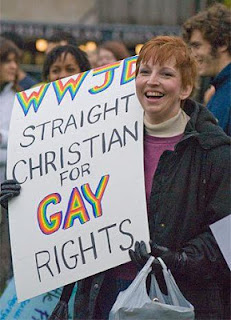
The first point to make is that a question addressing both sex
before marriage and homosexuality can lead us to reduce homosexuality to just sex
in order to compare the two as similar moral acts. In fact, I think the
question unfairly implies that this can/should be done. No-one is suggesting
that heterosexuality before marriage is disapproved of in its entirety by any Christians.
Indeed, as the father of a young girl, heterosexuality is something which has
been creepily put upon her from infancy by all sorts. People suggested within twenty-four
hours of her birth that she will break boys’ hearts. Certainly dating,
courtship, enjoying romantic stories, admiring others and enjoying admiration
in ways that are consistent with heterosexuality are tolerated, if not
celebrated, before marriage by people who still disapprove of (heterosexual)
sex before marriage. People who disapprove of homosexuality seldom wait until
the pants come off before the disapproval applies.
An exception to the above might be found in the celibate
orders of the Catholic church. There and only there have I ever encountered a
general acceptance of heterosexual or homosexual attraction equally and a separate
and distinct objection to the practical rubbing of genitals together or heavy
petting. (I am deliberately avoiding making any reference to sexual abuse by Catholic clergy here. It’s too serious to overlook or to glibly joke about.) In
fact the Catholic Church officially considers homosexual sex to be wrong in
common with oral sex, anal sex or mutual masturbation in a heterosexual married
relationship. All are non-procreative. That rather rarified view of sexual sin
is not a generally held one even among Catholic laity.

The second point to make is that Christian views on sex
before marriage and homosexuality are diverse (as the above distinction drawn
between Catholic clergy and laity shows). Definitely in regard to homosexuality
there is vocal support for loving and committed homosexual relationships
among a growing number of Christians. I would suggest that Christian opinion
on homosexuality is about as pluralistic as Christian positions on
birth-control or euthanasia. (I would appreciate any links to research on Christian attitudes to homosexuality if readers can suggest some).
Similarly there are many non-Christians who share a
disapproval of both sex before marriage and homosexual expression, married or
not. Christians don’t own the conflation of these disapprovals which the
original question might suggest. However this blog’s bias is that I know
Christianity far better than any other faith or even ethical system. Therefore
when I answer this question I’m going to be thinking foremost of the Christians
who hold both views, rather than the Muslims or Buddhists. I’d be happy to
receive comments from others with different experiences.
Before attempting to answer it I’d like to tidy up this
question to account for the above problematic points. At first it seems easy to
just clarify who we are discussing by referring to “those Christians who
disapprove of homosexuality and sex-before marriage” rather than just to
Christians. However when we consider people who hold both views in question we
are really just drawing a convenient category. Some people who disapprove of
homosexuality and sex-before marriage are going to disapprove of them in the
context of also disapproving of divorce and contraception, others are not. It’s
somewhat arbitrary to treat homosexuality and sex-before marriage in isolation.
For some people we will have missed the point of their views by doing so.
There are also some people who would disagree with
sex-outside of marriage who might only disapprove of homosexuality on that
basis too. I think my mother might well fit that space. My mother is not
inclined to view homosexuality as immoral itself despite that being the
attitude of her upbringing. She holds now, I think, that God makes some people
that way. She has a problem with promiscuity however and she would encourage
people to make a marriage commitment to be together for ever before shacking
up. (Mum, please comment if I have your views wrong by the way). Now she is in
a position of feeling like homosexual sex is somewhat wrong for occurring
outside of marriage but she would say that this is hardly gay people’s fault
seeing as we (wider society) are not allowing them to get married. I’m also arbitrarily excluding such views as these when answering this question.
It’s even harder to adjust definitions in the question for
the difference between the moral acts being discussed. One is about the act of
having sex and the other about a whole range of romantic and sexual
expressions. One way to resolve that
difference is to consider a point at which people who disapprove of sex-before
marriage and homosexuality would encounter a more similar test of their
approval. That’s the point when people in some form of solid unmarried straight
or gay relationship might want recognition. Now we are comparing a bit more
apples and apples.
Even there can we really say that any community, other than the exclusive aforementioned catholic ordained, has a common disapproval of de facto heterosexual relationships and homosexual relationships? Hypothetically it’s possible but practically does it exist? I live in a de facto opposite sex relationship and in circles where that is frowned upon I still feel I have to additionally and dramatically come out as someone who doesn’t disapprove of homosexuality. By comparison my de facto status is barely ever an issue.
Even there can we really say that any community, other than the exclusive aforementioned catholic ordained, has a common disapproval of de facto heterosexual relationships and homosexual relationships? Hypothetically it’s possible but practically does it exist? I live in a de facto opposite sex relationship and in circles where that is frowned upon I still feel I have to additionally and dramatically come out as someone who doesn’t disapprove of homosexuality. By comparison my de facto status is barely ever an issue.
I think that despite my lack of directly experiencing it,
there are people who do have a kind of sameness to their attitude towards
sex-outside of marriage and homosexuality. You can see something of it in such
writing as by Vaughan Roberts. Practically they may not express it in the same
way however. That’s about power and privilege as much as anything. Gay people
are a minority and, living in a regional town as I do, it is often just
presumed by people that they are nowhere around. Statistically speaking more
often they aren’t - just ask any gay rural people trying to find partners. That
makes it less confrontational to condemn them than the obviously in-the-room
pre-maritally fornicating heterosexuals. It’s a case of politeness… sort of.
Note: I am reflecting here on my own repeated personal
experience. Evangelical Christians are regularly inviting me to events were
homosexuality is presumed to be absent. Evangelical Christians are regularly
holding discussions about gay relationships and “the homosexual question” with
me but are much more muted about the unmarried nature of my own heterosexual
relationship. I am giving them the benefit of the doubt that this is borne of some
kind of politeness.
It should also be noted that an unmarried heterosexual
relationship just isn’t the same kind of upset to heterosexually organized
churches as a gay relationship is. My partner has been invited to attend conservative
Christian mothers’ groups. Realistically the lack of a ring on her finger just
doesn’t have to come up that much, unlike if any invite had to go to her and
her partner as well. So there is a pragmatic basis for the different expression
of moral disdain for my relationship and for a gay relationship. It’s less of a
challenge to people’s own relationships.
Honestly based on my experience the only time someone who
disapproves of homosexuality and sex before marriage reaches some point of
convergence in expressing those views is in the appointment of a church leader
or role model. Until that point the two views are expressed so differently it’s
not fair to compare them. Maybe they just are receiving different flack because
of the difference in their expression; maybe people receive more hostility for saying homosexuality is wrong because they actually say it more often and more insensitively than they make statements about defacto heterosexuality.
Hence I think if we want to properly investigate the question of “why Christians in particular receive very little flack for their views on sex-before marriage and a much greater and more virulent amount for their views on homosexuality” then we have to reserve that for asking about appointing people to Christian leadership positions. I think it’s a fairer question to ask.
Unfortunately it’s also a much narrower question and less interesting question. My first response is that I don’t really care what a church does with its own ministers. So no flack will be received from me regarding views on homosexuality and sex-before marriage that impacts on those appointments. That’s not entirely true as I feel sad and angry when churches exclude women from leadership but so long as belonging to those churches is voluntary I accept a level of it being none of my business.
However I have a problem with schools and hospitals that get public funding discriminating against people based on their relationship status. In fact I think I would be just as appalled at a publicly subsidized school firing an unmarried mother as I would them firing a gay man or lesbian. So in those situations it is equal flack from me in response to views on homosexuality and sex-before marriage that impacts on those appointments.
I’d really appreciate other people’s thoughts on this. I got really excited by the question at the start of this piece because I thought it might finally be the right way to approach something I've wanted to say for a while; that the morality of homosexuality is an issue in which a great many other battles over the nature of sin and god are being fought by all sides. I do think gay people and their lives are being used symbolically for other causes, like biblical literalism for example. I had hoped to come at those points from this question. However I think once I've unpacked the assumptions in this question it ceases to be a very good approach at all.
What do you reckon?
Sunday, September 23, 2012
A decent argument against legalising gay marriage.

Critical thinking is not about being the biggest, baddest
arguer on the block. Critical thinking is actually about robustly attacking one’s
own presumptions, more so than those of others. As part of that, critical
thinking involves putting in the effort to strengthen those opinions you
disagree with so that you’re not just preserving your opinion because your
opponent made some silly mistake.
To give an example I like shopping at markets rather than
supermarkets. If someone who disagrees with me says that they like supermarkets
for their convenience of everything in one place I could point out that
supermarkets are consciously designed to make you wander back and forth across
the whole store finding three items (while rows of stuff is at grabbing height for
children!). Across a large supermarket
with the floor space of a small market your shopping items may be under one
roof but are hardly in the one place. I may have won that argument however I
haven’t done my own thinking a lot of favours. It would be better if I paused
and thought is there any convenience benefit to shopping at a supermarket that
does stand up (such as a single point of sale which is probably what was meant
by “one place”). Then I could contend with such a benefit. That’s improving
your opponents’ argument first.
In the spirit of critical thinking then I have been trying
to ponder what would be a decent argument that access to the legal rite of
marriage should remain restricted to heterosexual adult partnerships and
continue to exclude homosexual adult partnerships.* This to me is the best way
to write out the question posed by the “gay marriage debate”. The question
isn’t whether or not gay people should be married. That could equally be
answered by the statement that nobody should get married.
I haven’t come up with anything very solid at all. What I’ve
been able to do is figure out what we can safely exclude when looking for such
a decent argument. This post is a walkthrough those exclusions.
Firstly it doesn’t
matter what homosexual people are generally like.
Sometimes you hear arguments against gay marriage which are
really just a grab bag of insults against gay people. Certain images of gay
culture are derogatorily referred to (like gay male bathhouse culture) to falsely
insinuate that gay people are not the marrying kind anyway. This argument
largely works because gay people and their supporters get so annoyed when they
hear it that they lose their cool. That looks bad and thus reinforces that the
speaker was right. “See, gay people get so easily offended by just
straightforward facts about gayness how could they possibly make a go at
marriage where such offence is par for the course.**”
If we can stay calm in the face of vitriol however this
argument is a push over. Why? I know gay people for whom I have a far more sexually
permissive history. But my legal access to marriage with my partner is clear.
Meanwhile these gay friends of mine (guys and girls) are all about having a mom
and mom or pop and pop apple pie relationship till death parts them, God bless
their gay hearts. And they are the ones who want to get married.
It really doesn’t matter if the average or even most common
homosexual is a hedonistic sensualist with a death wish, a porn addiction and a
scatological fetish. It really doesn’t.
Firstly, because they probably aren’t the ones who want to get married.
Secondly, because even if marriage becomes available for homosexual couples we
can still say that any homosexual couple who meets those descriptions oughtn’t
get married. Same as we might for a straight couple who does. The argument of
what gay people are generally like would only ever contribute anything if we
were arguing whether or not all gay couples should get married (right now). But
we are not arguing that, any more than the current situation is that all
heterosexual couples ought to be married (including all the abusive ones for
example). We are merely arguing whether or not it should be a legal option for both
types of couples.

Restricting marriage to heterosexual couples does not even
say people with a supposed range of character flaws can’t marry. It just says
they can’t marry people of the same sex. We really have lost our original topic
by this point, which may have been the intent of this kind of argument. Any argument
based on an alleged nature of the average gay person is basically the
rhetorical equivalent of throwing sand in the face of your opponent. It doesn’t
stand up to scrutiny but as it evokes a hostile reaction it can sometimes look
like a win.
Secondly we can’t
argue from authority.
 To “argue from authority” is (in rhetorical jargon) to make a
case based on someone else saying our conclusion rather than any reasons for
that conclusion. So for example an argument from authority would be to say that
Albert Einstein (who we all might agree is a pretty smart guy) says that time
travel is impossible (or possible, I’m not sure what he said actually).
In this particular debate two kinds of arguments from
authority are brought into play. One is that a particular magic book supposedly
says something that means marriage should be restricted to heterosexual
couples. In this post I showed how arguments about the authority of magic books
are generally fruitless. There’s never a test a magic book can fail that disproves
its authority. This kind of argument can drag us into this fruitless territory.
However we don’t need to disprove the authority of a magic
book (or argue that it doesn’t say what is being claimed) to show this type of
argument is irrelevant. We only need to show that whatever the magic book says,
it still needs to be argued that all the opinions of that magic book should be
enshrined in law. Given that the basis for law in this country oughtn't be the
opinions of any particular magic book that’s the end of that argument.
The second common argument from authority regarding this
question is to say that so-and-so gay person doesn’t think we should allow gay
marriage. If a gay person thinks so then it can’t be homophobic and if it isn’t
homophobic it must be true, seems to be the logic. For that to be a valid
argument we would have to accept that if a gay person thinks we should allow
gay marriage that that is a compelling argument too. It’s nonsensical.
Arguments from authority are not decent arguments in any
situation anyway. Even Einstein had to provide reasons for his opinions.
Thirdly it is not
enough to argue that there is a purpose to marriage that only makes sense for
heterosexual couples.
At first this can seem like a strange exclusion. Surely if
marriage serves a purpose that only makes sense for heterosexual couples, then it
makes sense to exclude homosexual couples from access to marriage?
However what we haven’t done with these kinds of arguments
is to show how allowing homosexual couples to legally marry prevents or
endangers the exclusive purposes it might serve for heterosexual couples.
 For example I can think of a fairly obvious purpose for
straight couples to marry that only applies to them. Straight couples can
accidentally have kids when they have sex. Obliging straight couples to make a
commitment to each other before they have sex consequently provides a means of
preparing their relationship for those accidental kids. Gay relationships don’t
produce accidental kids so this purpose of marriage doesn’t apply to them.
However if gay people get married to express a commitment to
their relationship even though they won’t have accidental kids this doesn’t do
anything at all to prevent or hinder straight people getting married to express
a commitment to their relationship because they might have accidental
kids. The former doesn’t preclude the latter
at all.
For some people their marriage is a very religious affair.
It is absolutely important to them that their legal marriage is also “in the
eyes of their God”. It may even be a way of praising their God for them. It
would be peculiar to suggest that in order to protect their ability to do this we
have to prevent the legal marriages of people for whom this purpose doesn’t
apply (non-theists and worshippers of other Gods). People currently are able to
get married for all sorts of reasons, some of which are relevant to only some
and not others.
What’s left?
Now having excluded the above three categories of argument I
am at a loss to think of anything else that supports the restriction of access to legal marriage to only heterosexual couples. I can
think of many reasons why the state shouldn’t get involved in marriage at all.
I can think of arguments why marriage is all round not a good idea even. But I
can’t think of a single decent argument that legal marriage ought to be
restricted to heterosexual couples.
That surprises me. I am actually suspicious that my own
opinion is preventing me from making the effort to come up with decent counter
arguments. After all most opinions I have would be a consequence of my balance
of for or against arguments. I can usually recognise a few good counter arguments to a even my strongly held views. In this case... perhaps someone else has some ideas?
_________________________________________________________________________
* The members of the partnership
can both be gay as but the partnership is still “heterosexual” if one is a
woman and one is a man.
** If you marry Pat Robertson.
Subscribe to:
Posts (Atom)