Showing posts with label creativity. Show all posts

Thursday, June 28, 2012

Bear with me.

I enjoy being foolish. I particular enjoy it when people have a good natured chuckle at my more un-testable beliefs. It was in that spirit that I was talking about the bear as my totem animal to some friends some time ago.


Why is that humorous? Well firstly because I am not sophisticated or particular. Grizzly or black or sun or even polar – though I stop short of panda or koala – will do despite their significant differences. My empathy with bears comes from pop–culture rather than careful study. In fact my favourite bear is Fozzie from the muppets, followed by Balloo from the Jungle Book. I was also a huge fan of Grizzly Adams in my youth with a well read copy of the novelized TV series a constant refuge.

For me the bear is a symbol of quiet strength – a strength that doesn’t need to prove itself. I think of bear like people as gentle giants – confidently able to decline challenges but capable of decisive action when necessary. I am not saying this is me. Instead this is something I aspire to be – something I have always tried to let inspire me. I’m more bearlike than I used to be.

The other key aspect to bears is that they are simple pleasure seekers. Bears in fiction live for honey (Winnie the Pooh), humour and friendship (Fozie Bear) and just the “bear” necessities of live (Balloo in Disney’s Jungle Book). We often represent a bears’ life as idyllic. Even Coca-cola and Bundaberg rum play on the chilled out existence of a bear in their ads. Given that bears are omnivores with no non-human predators it’s not a completely fantastic rendition. I think in our status-orientated, goal-focused and time-limited culture it’s a lifestyle we ought to celebrate more. Bears are not workaholics and they don’t do gyms.


I agree it is funny that I idolize all these bear qualities. I am playing up to an aspect of myself that both charms and infuriates some people who know me – a love of comfort and lack of career ambition. Then I am wrapping all that up in poorly understood mystical language using children’s books as references and even the Muppets as scripture. Besides all that I’m not really the body shape to be a bear, my shoulders aren’t broad enough, so there’s a physical comedy playing out too. It’s cheeky and silly and low brow in a good way. Let’s laugh away.

The second reason my totemic appreciation of the bear gets chuckles though is less cool. I think it’s because it’s identified with a group of people who get sneered at in Australia. The stereotype of non-aboriginal people into totem animals in Australia would be our working class whites – “white trash.” This class ranks only above aboriginal people and new migrants in who gets shat on by our government. When this crowd wear an airbrushed wolf t-shirt or a full-back tiger tattoo its viewed as a tacky approach to other cultures as “exotic” and “wild”; it’s read as “never traveled further than the flea markets”.


It’s true that it’s tacky to just pluck a totem animal out of a foreign ecosystem without any awareness of the cultures that have traditionally interacted with that animal. However and this is a bold claim (so I’ll bold it), it is a continuation of the dismissal of certain cultures as primitive that is behind a dismissal of animal totems rather than a desire to protect those cultures by looking down on a partial use of their symbolism and concepts. I say this because the purpose of the chuckle over totem animals is not to deepen conversation or encourage further learning but to end it. Therefore it makes more sense as an unwitting legacy of pejorative attitudes to animism than an advocacy of taking animism seriously.

We definitely don’t honour other spiritual practices by leaving them alone with a chuckle. I know people who love Tai Chi but have yet to study Daoism, same with Yoga and Hinduism, Karate and Shinto, Gospel and old time Black American Christianity. These class appropriate appropriations get a free pass however.  They don’t suffer from a general objection to ripping off other religious traditions for our spiritual benefit. If anything they are applauded as a step in the right direction towards understanding. Yet while old church furnishings are very cool at the moment totem animals are less so. Is it any surprise that this is a distinction that echoes the prejudices of our past rather than challenges them?

I don’t mind sharing the “white trash” label if having a totemic appreciation of an animal puts it upon me. Australia is a class ridden country but whether you are upper class or working class or a lumpen-proletariat is no indication of whether you have “class” in the sense I care about. Kind, humble, ambitious in love and with a hunger for knowledge is my kind of classy. I use philosophy to recognize sophisticated and academically trumpeted ideas in what people are saying who lack the jargon to express themselves in that way. What I find is that good ideas come from people who spend time thinking. People who already believe they know best seldom do such thinking, hence the truism that you have to first be a fool to become a sage.


One way the closed mind of the clever operates is to limit the list of what constitutes a spiritual question. How the universe began, where you go when you die, whether right or wrong are absolutes, are all legitimised spiritual questions. These are also very academic questions requiring proper study of serious theological and philosophical positions. Woe to anyone who thinks they can just answer such questions by taking a stroll. By contrast something like what is your favourite animal and why is considered a foolishness. They’re a child’s questions – not a scholar’s.
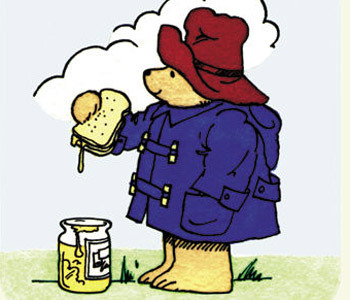
I, very seriously, would like to flip that distinction. One running theme of this blog is of the unimportance of the official canon of spiritual questions in particular the chief one – whether or not God exists. Answering that question tells us about our situation but not necessarily about how we should respond. In contrast a “foolish” question like what animal inspires us does actually speak to the core of all spiritual concerns; how do I live my life? Kids get this. I thank the kid in me for still getting it. Considering the bear is more relevant to me than any genesis or evolution debates.

None of this is to say that there is nothing to criticize in terms of our use of totemic animals in popular white culture. Traditional uses of totemic animals have a strong valuation of a diversity of gifts. There are no “bad” animals and nor are there ideal ones. The rabbit and the snow leopard are equals. That is important because in mirroring our totems individually we collectively mirror the ecosystem which benefits from all its members and we recognize different tools for survival which benefits our tribe. This is forgotten when this spiritual practice gets intermingled with capitalism – both its mass production and its competitive nature.

The sort of animal totemic system we end up with under capitalism is a glorification of the top of the food chain predators. Wolves, sharks, tigers and yes, the bear, all get a lot more love than other animals. Further we distort those animals to suit our own psychoses. The wolf is a pack animal who must work with their pack members to hunt successfully. A lone wolf is actually an unhealthy animal whose lack of socialization has led them to be expelled. Despite this the lone wolf is a celebrated animal archetype because it suits our alienated and hyper-masculine culture. This should be pointing us to something wrong with us.

We don’t notice the problem with a lot of people empathizing with lone wolves (or generally predators at the expense of every other kind of animal) because we aren’t adopting animal totems to guide us – to write over our lives. What we are doing is instead writing on to animal totems our own indulgences. I am guilty of that myself given how much I am celebrating a cartoon version of the bear rather than the real deal. This leads to the reverse of what animal totemisation is supposed to do. It’s supposed to temper our own excesses by giving us a companion spirit to walk with. There’s supposed to be challenges for us. It’s not a blank check to be a sociopath by saying “I’m a rabid dog.” Rabid dogs get put down is the lesson there.

One way to correct this is to deepen our relationship with real animals. I made it a mission of mine to actually see a bear in the wild. For a few minutes I was closer to a black bear than any other human at a tip in rural Canada. There were no fences in between and while it was mildly dangerous it was also one of the most cherished experiences of my life. That is out of reach for many Australians but we can all learn more about bears. We can learn about threats to their habitat and freedom as well. When I was doing work-for -the-dole I met a guy who even though he was on unemployment benefits himself donated to charities that freed bears in captivity. That’s deepening the relationship too. 


Forget bears though, there are animals all around us. My dog is at my feet at the moment and our yard is full of birds. Is it really so laughable that they might have something to teach us? Have we crawled up our collective human ass so much that allowing ourselves to be taught by an animal is foolish to us. Well, first the fool, then the sage.

Grrrr.


Wednesday, September 28, 2011

Chocolate sex.

I want to write. Oh boy do I want to write.

I am full of thoughts about the idea of a small god (whose power is not assured) and the connection between such worship and non-violence.

I am also partly through a piece about my purpose in doing philosophy. It's also going to explain why I do theology or as I think of it the philosophy of how we reconcile what should be (which you can call God) with what we've got.

The frustrating thing is that I'm not ready.  I'm not just saying I have to learn before I can speak. That process is endless and if I wait to learn 'enough' before I blog again... It aint gonna happen. 

 Probably a "serious" philospher would learn the common language around what they're blogging about. Maybe my blog on a weak God should be a discussion of Jack Caputo's work. Where I'm going with the purpose of philosophy re-reading Satre is probably worthwhile. However if I need to research it then it's not that common a language anyway. Really I'm just not that kind of writer. Name dropping does not make a case. Or maybe I just can't stand postmodern writing conventions while liking postmodern ideas.

But I do need to show some respect for the people who have put what will be early thoughts for me into actual practice. I have to listen to their stories, their frustrations, their motivations to keep trying or their dissatisfaction with those thoughts. I might be happy to ignore the thinkers/talkers/bloggers who precede me, but the activists are a different kettle. Like listening to mothers before I blog on motherhood, it's essential.

I also think I ought to put some of these thoughts into practice myself or atleast consider how it all might be applied by me in my situation. I mashed out the last two blogs in a frenzy after a decent break. I could do with balancing the do with the talk. Nothing like wearing a philosophy for a while before you claim its wonderful.

Aaagh. Writing is like chocolate sex to me though. I don't want to hold off on it. That's why you've got this. Soft warm chocolate sex. There's nothing else I want to do today. Reading, cooking, walking, gardening, bah. I want to write.

I hope you don't mind. You probably wanted to read words but an open acknowledgement of an author with a hunger and a lust to write for you could seem a little pervy. We could pretend the words just landed here from space. That's how we read many newspaper articles -as if there weren't an author at all. Someones first ever byline and someones last go unnoticed.

Mind you, this is a blog. Blogs put the author on show a lot. So it's expected I'll include my desire to write. And the approapriate way to do that is to be altruistic. That's not untrue. I do want you to be happy. I want you to be alive, in this world, awake and wonderful. I want you to stop (right now) hurting yourself and others. I put that want into my writing. It's why I write what I write.

It's just not why I write at all. It's not why I write instead of cooking. I'm just not being honest if I don't admit to the pleasure of writing philosphy and theology, the sheer ecstacy of ideas, and the particular delights of phrases and words. Its not making love, it's making sense and sometimes feels even better. It's chocolate sex. Soft, warm, over roasted nuts and vanilla icecream, with a chilli afterburn, chocolate sex. Thought porn?

But I'll have to wait.

Wednesday, September 7, 2011

How do we create?


In a recent conversation about God’s creation of the universe the statement “We (meaning us humans) don’t create” was made. It surprised me and didn’t feel right but I felt that to argue against it I had very little solid statements. After all "create" is a woolly term.
You click on “Create” to start a new Word document but is creating a file really creation? If so is it the Microsoft program doing the actual creating?  I would consider that the most mundane definition. Yet is that all there is to human creation as well – a programmed response? Or is there something else – the capacity to bring forth genuinely new possibilities?
What about when sand in a dust storm creates a swirling pattern? Is that the height of creation? The more I learn about uncertainty in physics the more I realise this is a different sort of creation to that of a classic linear program but it’s still not intelligent. What does intelligent mean though? Is there such a thing as creativity that is guided by intelligence? Or is intelligence itself guided (even chaotically determined) by a dumb creativity? Is intelligence just the swirl in the sand storm?
Originally this essay was a polemic against a certain understanding of humans as non-creative or as “bad” creators. In this understanding the only good creative acts of humanity occur when we become animated by a divine other. The classic story is that of the Muses. In other versions it is the Christian Holy Spirit. In yet other versions it is a life force that runs through us and the planet.
My greatest concern with this way of thinking is all the horrible burden of divinely inspired dross that we have to deal with because of it. If I write a self-help book that is considered God-inspired (or Angel channelled etc) how much harder is it for people to challenge my advice. If the only way for my advice to be worthwhile enough to publish is to attribute it to a divine other, then I am always bound to create (or rather not create!) this kind of unstoppable force.  It seems more honest and more accountable to acknowledge the author in the room; myself.
Still without a Muse or God (or for that matter a Devil) separate from myself how do I create? Where do the new things that seem to issue from me (or through me) come from? If creation is the province of the divine, then is it perhaps necessary to consider the “divine-within” to explain it?
There is a vein of Christian theology which can be tapped to describe this human divinity. Much has been made of the idea that we are “created in the image of God” particularly in terms of our creative capacity. Alfred Whitehead (Process Theology) and Paul Tillich are two very prominent theologians who might be worth reading in this regard. Alas I gave away my Paul Tillich text recently - only now seeing his relevance. That’s often the way with the books that sit on my shelf for years. 
There are also a range of theologies outside of Christianity which present the divine realm as essentially incomplete without humanity to shake it up. That afternoon television classic “Monkey Magic” illustrates how in Perfect Land Buddhism a stagnant celestial bureaucracy exists under the perfect Buddha spirit. It is as important that Monkeys irrepressible manner kicks over the norms of heaven as it is that their attitudes are reformed by Buddha spirit. Personally I always identified with Monkey in this fashion. In atleast some forms of Buddhism and Hindusim I would be free to, as there is no separation between ourself and demigods and Gods. The divine is not other at all.
The Khabbalah, a Jewish mysticism that has paralleled both temple and rabbinical Judaism, contains a theology built around the incompleteness of God. This is an incompleteness that is resolved in Christianity by the relational Trinity. In the Kaballah however it is humanity’s relationship with God that completes us both. (Sort of. I’m no expert on this and would appreciate correction.) In Khabbalism for God’s creative work to be enacted there is an absolute need for us to embrace our creative role. In this schema we are purpose built to create and God relies on us completing this purpose.
“New Age” philosophies tend to be deeply concerned with enabling human creativity. This is possibly because of their suitedness to the post-industrial economies that sponsor them and the importance of creativity in those economies. It is also possibly because the New Age is defined by a demand for utility by the individual “seeker”. To the extent that New Age philosophies borrow Hindu and Khabbalistic ideas they tend to emphasise a human divinity. To the extent that they borrow from Gnosticism instead they tend to accentuate the divine-other as a source for human creativity. Certainly this question is huge in the New Age literature but it is hardly answered consistently.
My own formulation of how I create is complicated. I do believe that original “stuff” can emerge from me. I don’t think I am ever a doorway to a divine force though. I guess I never think of my creations as being divine. Somehow I consider them both ordinary and yet new and spontaneous. In fact it seems to me to be the ordinary way of things to be creative. That's life.
I don’t know how I can evaluate whether what I create is dross or gold however. I think that’s impossible in an abstract fashion. Living is the real on-going test of my ideas. I guess that means my creations are never really “good” or “bad” merely useful or not. This further reduces any expectation of a divine source.
I also think that the classic image of the creative human is a very atypical one. They are idealised as alone on a mountain receiving that flash of inspiration or conjuring truth ex nihilo. I think it’s more ordinary to create with ones’ peers and from ones’ culture. Further I celebrate such a process. I have always preferred rhetoric over other art forms precisely because its quality is produced through its audience and never without them. There is something therefore about the usual image of individual creativity whether by God through us or by us, which excludes me.
When I consider the greatest creations of humanity such as writing itself these obviously don’t belong to any one individual. In an on-going fashion we continue to create writing and what it means. That’s what blogs are. When this sort of creation is the subject in question it again reduces the expectation of a divine source. There is something of the swirling sand in the dust storm about it after all.
In the same way I also don’t understand the opposite image of God the sole creator. As with any rhetorician, the quality of creation is produced through its audience and never without them. Actually if your medium is Life then audience participation goes off the chart.  If you’re creating life of course you’re co-creating with life because of just what life means. It’s more than a little like roleplaying dungeons and dragons. Sure,the dungeon master has all the maps and has devised a series of events but its the decisions of the characters which makes the story. So if you ask the question from the other side – If God creates how do we join in? – I come closer to a Khabbalistic answer to the question.
My kid just asked me “What are you writing, Dad?”
I replied “A difficult question. How do we create things?”
She thought about it and then stated as if obvious, “With our hands.”
“Yes”, I continued, “But where do our ideas come from before our hands?”
“Our heads,” said my daughter.
“Yes, but where do our ideas come from before our heads?”
My daughter was momentarily stumped. She actually said “A challenge,” before adding “Our eyes.”
She wasn’t entirely sure though. What would you have told her?